Factors Influencing Women’s Entrepreneurship in Barranquilla, Colombia, from the Fogel and Gnyawali Perspective
Fatores que influenciam o empreendedorismo feminino em Barranquilla, Colômbia, na perspetiva de Fogel e Gnyawali
Factores que influyen en el emprendimiento femenino en Barranquilla (Colombia), desde la perspectiva de Fogel y Gnyawali
DOI: https://doi.org/10.57188/rieca.2026.006
Gustavo Rafael Henríquez-Fuentes * ORCID: https://orcid.org/0000-0002-4749-8892
Fabiana Andrea Gómez Martínez * ORCID: https://orcid.org/0009-0006-5518-1365
María de los Ángeles Silva Jiménez * ORCID: https://orcid.org/0000-0002-0984-5478
Universidad Libre, Faculty of Economic, Administrative, and Accounting Sciences. Barranquilla, Colombia
How to cite:
Henríquez-Fuentes, G., Gómez, F. y Silva, M. (2026). Factors Influencing Women’s Entrepreneurship in Barranquilla, Colombia, from the Fogel and Gnyawali Perspective. RIECA, 1(1). e-006. https://doi.org/10.57188/rieca.2026.006
ABSTRACT
This study aims to determine the factors that influence women's entrepreneurship in Barranquilla from the perspective of Fogel and Gnyawali. A quantitative study with a descriptive approach was conducted through surveys administered to 146 participants for data collection. Four key dimensions were analyzed: legislation and government policies, sociocultural and economic factors, economic and non-economic support measures, and general and specific training. The findings seek to contribute to a better understanding of the challenges and opportunities faced by women entrepreneurs in Barranquilla and provide relevant information for designing strategies and policies that foster a more favorable entrepreneurial environment.
Keywords: Entrepreneurship; Sociocultural Factors; Government Policies; Support Measures; General Training.
JEL Code: L26; Z1; H11; H25; I21; O17.
RESUMO
Este estudo tem como objetivo determinar os fatores que influenciam o empreendedorismo feminino em Barranquilla, a partir da perspectiva de Fogel e Gnyawali. Foi realizado um estudo quantitativo com abordagem descritiva, por meio de questionários aplicados a 146 participantes para a coleta de dados. Foram analisadas quatro dimensões principais: legislação e políticas governamentais, fatores socioculturais e econômicos, medidas de apoio econômicas e não econômicas, e capacitação geral e específica. Os resultados buscam contribuir para uma melhor compreensão dos desafios e oportunidades enfrentados pelas mulheres empreendedoras em Barranquilla e fornecer informações relevantes para a elaboração de estratégias e políticas que promovam um ambiente empreendedor mais favorável
Palavras-chave: Empreendedorismo; Fatores Socioculturais; Políticas Governamentais; Medidas De Apoio; Formação Geral.
INTRODUCTION
Female entrepreneurship has become an important factor for economic and social development, particularly in contexts where women face restrictions in accessing formal employment, financing, and business training. In cities such as Barranquilla, many women have decided to create their own businesses as a strategy to generate income and help support their households, despite difficulties associated with informality and the socioeconomic conditions of the environment. In this context, access to financial resources and growth strategies is a determining factor for the sustainability of entrepreneurial ventures, especially micro and small enterprises led by women (Gil Hoyos et al., 2020).
Within this framework, the article aims to analyze the factors that influence women's entrepreneurship in Barranquilla from the perspective of the entrepreneurial ecosystem model proposed by Fogel and Gnyawali, considering dimensions such as legislation and government policies, sociocultural and economic factors, institutional support measures, and general and specific training. In this regard, knowledge management makes it possible to articulate organizational capabilities, facilitate decision-making, and strengthen learning processes within entrepreneurial ventures (Martínez Garcés & Garcés Fuenmayor, 2021).
The article is structured progressively. First, it presents the background, which contextualizes female entrepreneurship and highlights the importance of the topic in academic and social spheres. Subsequently, the theoretical framework that supports the research is developed from a conceptual approach. Next, the methodology is described, based on a quantitative approach with a descriptive scope and the application of surveys to women entrepreneurs. The results obtained from the information collected are then presented and analyzed, and finally, the conclusions summarize the most relevant findings of the study.
BACKGROUND
Entrepreneurship is understood as the set of activities aimed at developing projects that pursue specific economic, political, or social objectives and that also have distinctive characteristics, mainly because they involve uncertainty and innovation. Entrepreneurs seek to create innovative solutions or improve existing products and services by identifying and capitalizing on market opportunities (Gonzáles, 2019). Likewise, business growth is conditioned by internal and external constraints that limit organizational development; therefore, proper management is essential to improve the competitiveness of entrepreneurial ventures (Rodríguez, 2021). Entrepreneurship has been the subject of numerous studies because of its undeniable impact on society and its contribution to development. Its role is fundamental not only in job creation and the strengthening of academic training, but also in energizing the economy in all its dimensions (Patiño et al., 2018).
Entrepreneurship is considered one of the main drivers of business creation, and entrepreneurs play a central role in any economy, particularly because their skills and initiatives allow them to anticipate individual needs and bring new ideas to the market (Borja et al., 2020). It is highly important for entrepreneurs to acquire the basic concepts that enable them to reduce the risks and uncertainties inherent in business activity, adopting a managerial approach to address the situations that arise and relying on principles of administrative management (Henao, 2020).
Women-led entrepreneurship plays a fundamental role in the economy, although it still faces obstacles that hinder its expansion. Nevertheless, economic crises have encouraged more women to create their own businesses, although their participation remains concentrated mainly in specific sectors with limited diversity (Montero & Camacho, 2018).
The purpose of this study is to determine the factors that influence women's entrepreneurship in Barranquilla from the perspective of Fogel and Gnyawali. Understanding the characteristics and challenges women face when undertaking entrepreneurial activity is necessary to develop strategies that promote their growth in more competitive and inclusive environments. The study also analyzes how social, economic, political, and cultural variables influence the development of women-led ventures in Barranquilla. This article follows a descriptive approach using survey techniques and seeks to contribute recommendations that promote the development of new ventures led by women.
THEORETICAL FRAMEWORK
Female entrepreneurship in Latin America has gained relevance as a driver of economic empowerment, especially after the COVID-19 pandemic. Although it faces challenges such as educational dropout and fear of failure, women have been able to recognize opportunities in areas such as finance and services, sustaining their businesses and creating jobs. However, health restrictions have hindered their exports, which highlights the importance of studying gender stereotypes and their effect on female entrepreneurship in order to promote effective support in the future (García et al., 2022). The pandemic generated significant impacts on business activity, affecting income, employment, and operational capacity, which forced entrepreneurs to rethink sustainability strategies (Aquino Rocha et al., 2021).
Women have developed skills in self-knowledge, emotional management, leadership competencies, and people management. Motivational factors such as the pursuit of self-realization and job dissatisfaction drive their decision to start a business, along with the desire to achieve financial independence and a balance between personal and working life (Krauss and Bonomo, 2020). Many women start businesses out of economic necessity and face diverse limitations that hinder the development of their enterprises and improvements in their quality of life. Common characteristics among women entrepreneurs include motivation, work experience, and the ability to take risks; however, access to financing continues to be an important challenge that restricts their economic capacity (Paredes et al., 2019).
Women entrepreneurs face various problems that affect the performance and growth of their businesses, including lack of work experience, limited access to financing, and social and cultural conditions that restrict their development (Saavedra & Camarena, 2015). The search for autonomy and freedom drives many women to start their own businesses in areas where they already have work experience. Although they face economic obstacles, such as difficulty accessing financing, gender stereotypes do not necessarily represent a significant barrier. Women entrepreneurs tend to define success in emotional terms, prioritizing personal satisfaction and passion for their work rather than focusing exclusively on financial indicators (Álvarez, 2023).
One of the main reasons women are compelled to start businesses is labor-market instability, which prevents them from maintaining economic stability to support their families and from having autonomy over their time to fulfill the diverse responsibilities they carry out in their households (Acosta et al., 2017).
Fogel and Gnyawali's Theory
The entrepreneurial ecosystem is influenced by factors such as government policies, financing options, and technical training. Business regulations and access to capital, whether through loans or support programs, are determining factors for business development. Business education and training play a key role in preparing entrepreneurs, while tax incentives, information networks, and advisory services strengthen the environment, facilitating the creation and growth of new firms (Jiménez et al., 2019). Similarly, innovative leadership becomes a key factor in fostering organizational cultures oriented toward innovation, enabling ventures to adapt to changing environments and improve their competitiveness (Fontalvo & Cienfuegos Molina, 2020).
Fogel and Gnyawali's theory explains the creation of a new firm based on government legislation and policies, sociocultural and economic factors, economic and non-economic support measures, and, finally, general and specific training in business creation. Considering the opportunities, skills, and predispositions that shape this process, these dimensions are addressed as follows:
Government Legislation and Policies
The creation of a company depends not only on the initiative of an entrepreneur, but also on the political, economic, and cultural context in which it develops. Rules and regulations, as well as the administrative and legislative procedures imposed by government, directly affect the establishment of a business in a competitive market. At the same time, the political and regulatory environment can foster innovation and the formalization of diverse ventures (Kantis et al., 2012). A frequent disconnect exists between the formulation of regulations and their practical implementation: although ordinances and incentives for entrepreneurship exist, implementation, financing, and local coordination problems limit their real impact. This highlights the importance not only of designing laws, but also of ensuring the resources and capacities needed for their execution (Alvarado & Quinto, 2024; García, 2023).
Sociocultural and Economic Factors
Entrepreneurship has become a key engine for economic development and regional competitiveness, leading countries to promote entrepreneurial activity through strategic investment. For entrepreneurship to succeed, the state must be able to invest in research and innovation, since building knowledge-based societies is essential (Molina, 2022). From a productive perspective, innovation also involves incorporating new materials and processes that improve product efficiency and sustainability, as evidenced by studies analyzing the use of natural fibers to develop new materials with competitive mechanical properties (Gómez Méndez et al., 2020). The vitality of entrepreneurship is also closely linked to culture; entrepreneurial culture comprises the values, beliefs, and practices that shape the decision to start a business and organize work. These factors are mediated by institutions and public policies: appropriate state promotion can facilitate the transformation of local culture so that entrepreneurship is considered a socially valued option (Maturana, 2021).
However, the act of entrepreneurship is ultimately a personal decision motivated by internal factors, with motivation being one of the most widely studied. From this perspective, the Need for Achievement Theory states that entrepreneurs are driven by the satisfaction derived from achieving their goals. They take moderate risks, seek to overcome obstacles, and require feedback in the process, while attributing success or failure to themselves (Silva & Rompato, 2020). This psychological need is important because it is linked to survival- or opportunity-driven motivation. The decision to undertake entrepreneurial activity is mediated by this impulse, which in the present study is also connected to the socioeconomic conditions of the sample.
Economic and Non-Economic Support Measures
Low profitability and limited access to financing are common problems for entrepreneurs, especially in MSMEs. Access to credit is limited by high costs, inadequate terms, and complex requirements. Financial education and access to financial services promote the development of human capabilities in the population; these factors play a crucial role in improving economic well-being and reducing poverty (Salgado et al., 2023). Support policies should not be limited simply to encouraging the creation of firms, but should also focus on promoting ventures with growth potential by combining subsidies, technical assistance, and guidance so that new businesses can evolve into competitive firms (Kantis et al., 2012).
General and Specific Training in Business Creation
Education plays a crucial role within the entrepreneurial ecosystem, since educational resources should help build a solid business culture and influence entrepreneurial intention (Gonzales and Viera, 2020). Entrepreneurship is considered an essential competence that requires knowledge, skills, and attitudes to transform a business idea into an actual enterprise (Gonzales and Viera, 2020). Entrepreneurial education plays a central role, and pedagogical designs, context, and content have been shown to be important for university students to develop entrepreneurial intention (Araya and Pizarro, 2021). Beyond research, the training component should focus on competencies and include financial education for resource management and investment decision-making, which can directly improve people's economic situation (Salgado et al., 2023).
This training foundation is theoretically supported by Human Capital Theory. This theory assumes that people's work is the axis of the production of goods and services through the productive forces they implement (Sandoval & Hernández, 2018). Human capital, which includes education, experience, and management skills, is the critical resource that determines the success or failure of individual entrepreneurs. In the present study, this theory is connected to the Support and Training dimension of the Fogel and Gnyawali model, considering that the educational level and lack of specific knowledge (financial and accounting) among women entrepreneurs constitute a structural barrier that prevents them from accessing ecosystem resources and formalizing their businesses.
The study of female entrepreneurship in Barranquilla will be developed from an integral perspective, guided by the Entrepreneurial Ecosystem Model proposed by Gnyawali and Fogel. This approach makes it possible to understand how different elements of the environment influence the creation and sustainability of business initiatives led by women. To this end, four key dimensions of the ecosystem will be analyzed: the limitations and requirements of the regulatory framework, the social and economic conditions that may increase the vulnerability of women entrepreneurs, the strength of the institutional infrastructure that provides support and training, and the availability of financial resources needed to promote their projects.
METHODOLOGY
This research was developed under a quantitative approach with a descriptive design, aimed at identifying the factors that influence women's entrepreneurship in Barranquilla from the perspective of Fogel and Gnyawali. This approach made it possible to analyze the experiences, perceptions, and motivations of women entrepreneurs regarding the social, economic, and cultural challenges they face in their environment.
The population consisted of women entrepreneurs in the city of Barranquilla who carry out activities in different productive sectors, such as commerce, services, gastronomy, and beauty. A sample of 146 women was selected through non-probabilistic convenience sampling, considering their accessibility and willingness to participate.
Information was collected through a structured questionnaire based on the dimensions of the Fogel and Gnyawali model: legislation and government policies, sociocultural and economic factors, support measures, and general and specific training. The instrument included closed and open-ended questions that made it possible to collect both quantitative and qualitative data in order to understand the conditions, opportunities, and limitations faced by women entrepreneurs. The surveys were administered in person and virtually, which facilitated broader coverage and diversity in responses.
The data obtained were organized and analyzed using descriptive statistical techniques, including frequencies and percentages to identify trends in each dimension. In addition, content analysis was used to interpret qualitative information and complement the findings with relevant observations.
The study was carried out during the second semester of 2024 in the city of Barranquilla, ensuring compliance at all times with ethical principles of confidentiality, anonymity, and informed consent. The results seek to provide useful information to strengthen support strategies and public policies aimed at female entrepreneurship, promoting equal opportunities and local economic development.
|
Table 1 |
|
|
|
Classification of questions |
||
|
CATEGORY |
QUESTION |
DESCRIPTION |
|
Government legislation and policies |
Question 1 |
Is your business registered with the Chamber of Commerce? |
|
Question 2 |
Do you have a Tax Identification Registry (RUT) as an individual? |
|
|
Sociocultural and economic factors |
Question 3 |
What is your socioeconomic stratum according to your public utilities bill? |
|
Question 4 |
Did your business arise from the need to generate income to support yourself and your family? |
|
|
Economic and non-economic support measures |
Question 5 |
Participation in fairs or business rounds |
|
Question 6 |
Support from government entities (economic and non-economic). |
|
|
General and specific training |
Question 7 |
Legal knowledge |
|
Question 8 |
Level of education (technical, secondary school, etc.). |
|
Note. Data based on the survey administered to 146 women entrepreneurs in Barranquilla (2024).
RESULTS AND DISCUSSION
Based on the question classification table, the questions directly related to the diagrams developed in the results section were selected in order to conduct a more precise and representative analysis of the dimensions established by Fogel and Gnyawali.
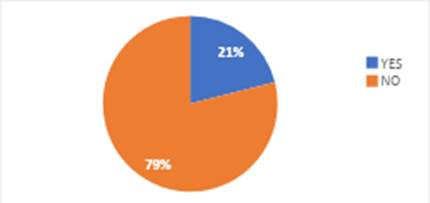
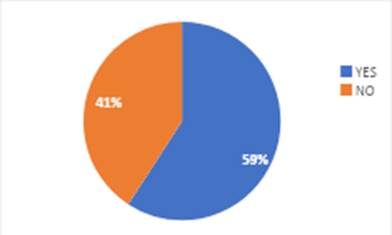
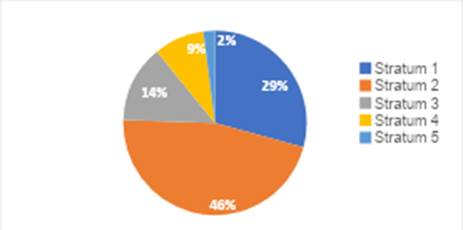
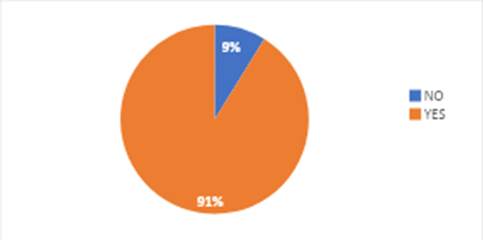
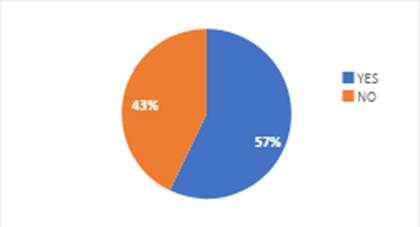
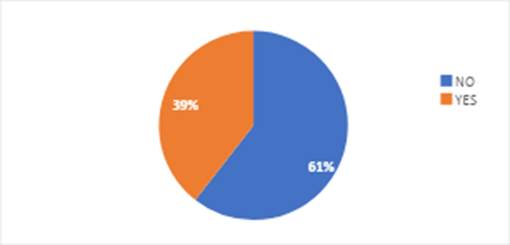
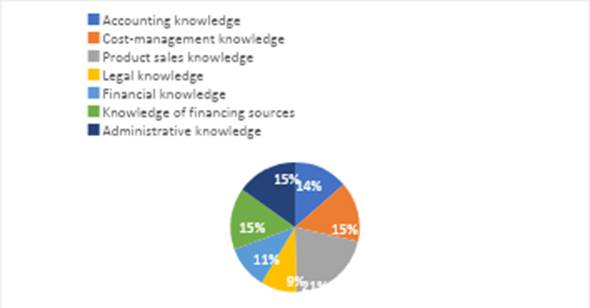
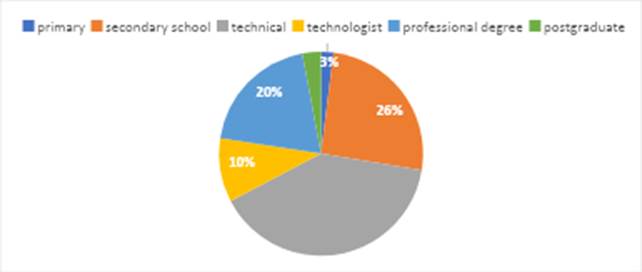
In the area of legislation and government policies, questions related to business registration with the Chamber of Commerce and registration in the Single Tax Registry (RUT) were analyzed (see Figures 1 and 2). These figures illustrate the degree of formalization among women entrepreneurs. Regarding sociocultural and economic factors, questions related to socioeconomic stratum and motivations for starting a business out of economic necessity were selected (see Figures 3 and 4). These provide relevant information about the socioeconomic context in which women-led businesses emerge. With respect to economic and non-economic support measures, questions related to participation in trade fairs or business events, as well as access to institutional support, were analyzed (see Figures 5 and 6). This makes it possible to determine the scope of support and advisory services received by the participants. Finally, regarding the general and specific educational dimensions, questions related to legal knowledge and educational level were considered, as shown in Diagrams 7 and 8. These illustrate the academic preparation and technical skills that influence the success of women entrepreneurs in Barranquilla.
Government Legislation and Policies
The empirical findings of the study reveal that the Legislation and Government Policies dimension of the entrepreneurial ecosystem proposed by Gnyawali and Fogel operates as a structural barrier rather than as a facilitator for women entrepreneurs in Barranquilla. This assertion is supported by the high level of informality identified: Figure 1 shows that 79.5% of businesses have not completed their registration with the Chamber of Commerce. In addition, Figure 2 shows that less than half of the women entrepreneurs, 41%, have a Single Tax Registry (RUT) as individuals.
This significant formalization gap supports Fogel and Gnyawali's thesis that rigid or complex procedures act as an inhibitor. Women entrepreneurs perceive that the costs associated with registering businesses or brands are high, and this perception is compounded by a tax burden considered excessive. Consequently, remaining informal becomes a survival strategy adopted to mitigate fiscal and regulatory pressure. This suggests that current policies are not adapted to facilitate the transition to formality in the microenterprise and necessity-driven entrepreneurship segment, limiting from the outset the possibilities of access to financing channels and formal support and perpetuating the economic fragility of these businesses (Acevedo et al., 2024).
Figure 1.
Is your business registered with the Chamber of Commerce?
Note. Data based on the survey administered to 146 women entrepreneurs in Barranquilla (2024).
Figure 2.
Do you have a Tax Identification Registry (RUT) as an individual?
Note. Data based on the survey administered to 146 women entrepreneurs in Barranquilla (2024).
Sociocultural and Economic Factors
The results indicate that socioeconomic factors play a crucial role in the profile of entrepreneurs. The socioeconomic profile of the sample, concentrated in stratum 2 as shown in Figure 3, is directly related to Fogel and Gnyawali's socioeconomic conditions. These conditions of vulnerability act as a push factor from the formal labor market and reinforce the pattern of necessity-driven entrepreneurship (Figure 4), creating a cycle in which the environment drives business activity but does not provide the resources needed for consolidation. Figure 4, which shows that the vast majority, 91%, of women start businesses because of the need to generate income for subsistence, is directly explained by the Theory of Necessity Entrepreneurship (Silva-Peralta & Rompato, 2020). Although Fogel and Gnyawali include socioeconomic conditions, this specific motivation is an intrinsic factor that affects business decisions. Entrepreneurship becomes a survival strategy in response to unemployment or the need to reconcile family care responsibilities, which explains why these businesswomen prioritize immediate income generation over long-term growth or investment in formalization.
Figure 3.
Socioeconomic stratum.
Note. Data based on the survey administered to 146 women entrepreneurs in Barranquilla (2024).
Figure 4.
Did your business arise from the need to generate income to support yourself and your family?
Note. Data based on the survey administered to 146 women entrepreneurs in Barranquilla (2024).
Economic and Non-Economic Support Measures
The Non-Financial Support and Training dimension is the only one that shows partially positive results, although these remain insufficient to offset regulatory barriers. On the one hand, Figure 6 indicates that, although access to formal economic support is limited, the women entrepreneurs have received a certain level of non-economic support from the public sector, such as training or guidance, which suggests an institutional effort that should be strengthened. This situation reinforces the importance of financing as a determining factor for business growth, particularly in small-scale ventures (Gil Hoyos et al., 2020; Hernández and Castillo, 2021).
On the other hand, Figure 5 demonstrates the effectiveness of contact networks and sales platforms: 57.5% of respondents have participated in fairs or business rounds and, among them, a significant 56.1% managed to make sales. This active and successful participation in networking and fairs validates the importance of support infrastructure that fosters the flow of information and resources. These results confirm that non-economic support and access to visibility platforms are measures with high perceived value and immediate usefulness for subsistence women entrepreneurs, which is essential to improve the management of their businesses. However, this non-financial support must be strategically articulated beyond sales, focusing on formalization and the development of human capital (Sandoval Vásquez & Hernández Castro, 2018), so that women entrepreneurs can capitalize on these gains and move from survival to sustained growth. In this context, proper knowledge management makes it possible to improve organizational capabilities and facilitate the sustainability of entrepreneurial ventures (Martínez Garcés & Garcés Fuenmayor, 2021; Quintero et al., 2022).
Figure 5.
Have you participated in events such as fairs or business rounds?
Note. Data based on the survey administered to 146 women entrepreneurs in Barranquilla (2024).
Figure 6.
Have you received NON-economic or non-financial assistance from any local, departmental, or national government entity?
Note. Data based on the survey administered to 146 women entrepreneurs in Barranquilla (2024).
General and Specific Training in Business Creation
Figure 8 shows that the predominant educational level among women entrepreneurs is concentrated at the technical and secondary levels, which, according to Human Capital Theory (Sandoval Vásquez & Hernández Castro, 2018), generates a deficit in the stock of knowledge that should drive productivity. This limitation is evident in Figure 7, where women entrepreneurs report a critical lack of competencies in fundamental areas such as accounting, cost management, finance, and risk management. In the context of the Support and Training dimension of the Gnyawali and Fogel model, this skills gap is an intrinsic factor that weakens the ecosystem. If the human capital base is weak, the ability of women entrepreneurs to assimilate and apply information from existing support programs is reduced, rendering government and private training strategies ineffective.
Figure 7.
Legal knowledge.
Note. Data based on the survey administered to 146 women entrepreneurs in Barranquilla (2024).
Figure 8.
Level of education (technical, secondary school, etc.).
Note. Data based on the survey administered to 146 women entrepreneurs in Barranquilla (2024). These limitations may be understood as constraints that affect organizational performance and must be identified and strategically managed to achieve business growth (Rodríguez, 2021).
CONCLUSIONS
The analysis of the results presented makes it possible to conclude that female entrepreneurship in Barranquilla is conditioned by social, economic, educational, and institutional support factors, as proposed by the Fogel and Gnyawali model. Women entrepreneurs show a high degree of perseverance and commitment, but they face structural limitations that restrict their growth and hinder the formal consolidation of their businesses (Sandoval et al., 2020).
In the legislative and government policy dimension, it was identified that a large proportion of women entrepreneurs have not formalized their businesses with the Chamber of Commerce and do not have a Single Tax Registry, reflecting persistent informality. This situation coincides with Saavedra and Texis (2019), who argue that the absence of a solid institutional framework and effective policies hinders entrepreneurship. Likewise, Valenzuela et al. (2018) emphasize that high costs and complex procedures limit formalization, a finding that is also observed in this study.
Regarding sociocultural and economic factors, most participants belong to socioeconomic strata 1 and 2 and started businesses out of economic necessity, seeking to support their families. These results support the findings of Paredes et al. (2019), who argue that the lack of job opportunities drives many women to create their own sources of income. In addition, the predominance of middle-aged women is consistent with Krauss and Bonomo (2020), who highlight that female entrepreneurship also responds to the desire for financial independence and a balance between work and personal life. Nevertheless, the insecurity and low income problems mentioned by the participants confirm the structural challenges identified by Molina (2022) regarding the vulnerability of the Colombian socioeconomic environment.
With respect to economic and non-economic support measures, the results show limited access to credit, subsidies, or financial incentives. However, participation in fairs, training sessions, and business events has been beneficial in increasing sales and strengthening business skills, demonstrating the value of non-monetary strategies. These findings are consistent with Valenzuela et al. (2018), who emphasize that education and institutional guidance are key to promoting business sustainability.
In the category of general and specific training, most women entrepreneurs were found to have technical or secondary education and gaps in accounting, cost management, finance, and digital sales. This lack of formal preparation limits administrative efficiency and growth opportunities, in line with González and Vieira (2020), who point to the need to strengthen entrepreneurial education from early stages. Similarly, Salgado et al. (2023) emphasize that human capital development, through financial and technical education, is essential for economic sustainability and sound decision-making.
In summary, the results show that female entrepreneurship in Barranquilla represents an important engine of economic and social development, although obstacles associated with informality, lack of access to financing, and insufficient business training persist. As García (2023) and Jiménez et al. (2019) suggest, strengthening institutional, educational, and social support networks will make it possible to create a more equitable and inclusive environment in which women can consolidate their projects and contribute significantly to regional economic progress.
Author statement: The authors approve the final version of the article.
Conflict of interest statement: The authors declare that they have no conflicts of interest.
Author contributions:
- Conceptualization: Fabiana Andrea Gómez Martínez, María de los Ángeles Silva Jiménez, Gustavo Rafael Henríquez Fuentes
- Data curation: Fabiana Andrea Gómez Martínez, María de los Ángeles Silva Jiménez, Gustavo Rafael Henríquez Fuentes
- Formal analysis: Fabiana Andrea Gómez Martínez, María de los Ángeles Silva Jiménez, Gustavo Rafael Henríquez Fuentes
- Investigation: Fabiana Andrea Gómez Martínez, María de los Ángeles Silva Jiménez, Gustavo Rafael Henríquez Fuentes
- Methodology: Fabiana Andrea Gómez Martínez, María de los Ángeles Silva Jiménez, Gustavo Rafael Henríquez Fuentes
- Writing - original draft: Fabiana Andrea Gómez Martínez, María de los Ángeles Silva Jiménez, Gustavo Rafael Henríquez Fuentes
- Writing - review and editing: Fabiana Andrea Gómez Martínez, María de los Ángeles Silva Jiménez, Gustavo Rafael Henríquez Fuentes
Funding: This study was self-funded.
REFERENCES
Abad Rodríguez, I. S. (2023). Factores que inciden en el sobreendeudamiento en una cooperativa de ahorro y crédito: Azogues – Ecuador [Tesis de grado, Universidad Católica de Cuenca].
Acevedo López, D. P., Simancas Trujillo, R. A., Higuera Ojito, V. H., & Miranda-Passo, J. C. (2024). Conditions and barriers to entrepreneurship: a review of the microbusiness ecosystem in Monteria, Cordoba. Salud, Ciencia y Tecnologia - Serie de Conferencias, 3. https://doi.org/10.56294/sctconf20241020
Álvarez, C. S. (2023). Limitaciones y factores de éxito del emprendimiento femenino: Una perspectiva costarricense. Yulök Revista de Innovación Académica, 7(1), 12–30.
Alvarado Morante, F. A., & Quinto Parra, K. M. (2024). Políticas públicas para emprendimientos y su nivel de aplicación en el gobierno municipal del cantón Quevedo periodo 2019–2023. LATAM Revista Latinoamericana de Ciencias Sociales y Humanidades. https://latam.redilat.org/index.php/lt/article/view/2452
Andino-González, P. (2023). Estudio Bibliométrico sobre Empleabilidad. Ad-Gnosis, 12(12), 1-25. https://doi.org/10.21803/adgnosis.12.12.605
Antúnez, A. M. C., Morales, C. E. B., & Araujo, D. R. S. (2019). La sostenibilidad global en una empresa de transporte urbano de viajeros en autobús: Estudio de caso. In Memorias del III Congreso internacional en administración de negocios internacionales (CIANI): Retos y oportunidades del desarrollo sostenible en los negocios internacionales (pp. 28-42). Universidad Pontificia Bolivariana.
Aquino Rocha, J. H., Gonzales León, F. A., Andia Illanes, J. W., Mamani Copatiti, F., Siles Zenteno, C. M., & Cayo Chileno, N. G. (2021). Impacto de la cuarentena de COVID-19 en empresas constructoras de Cochabamba (Bolivia). Avances: Investigación en Ingeniería, 18(2). https://doi.org/10.18041/1794-4953/avances.2.7072
Araya-Pizarro, S. C. (2021). Influencia de la educación emprendedora sobre la intención de emprender del alumnado universitario. Revista Educación. https://www.redalyc.org/journal/440/44066178029/html/
Ariza Dau, M. A., Mendoza Vega, L., Torres Pimiento, D., Garcia García, M., & Miranda Passo, J. C. (2023). Human capital and business growth of the Startups: an approach to the state of the art . Salud, Ciencia y Tecnología - Serie De Conferencias, 2, 362. https://doi.org/10.56294/sctconf2022362
Arrieta, L. E., & Morales, C. E. B. (2024). Necesidades sociales y dimensiones del capital social: análisis de beneficiarios de Familias en Acción. Telos: Revista de Estudios Interdisciplinarios en Ciencias Sociales, 26(2), 388-407.
Barrera, M. B., & Morales, C. E. B. (2025). Análisis de la percepción de la cultura tributaria en Colombia durante el periodo pospandemia. Dictamen Libre, (36), 2.
Borella, A. (2019). Fundamento ontológico del modelo en Hayek. Procesos de Mercado, 16(2), 103–123. https://doi.org/10.52195/pm.v16i2.25
Borja-Barrera, M., & Barragán-Morales, C. (2025). Perception analysis of tax culture in Colombia during the post-pandemic period. Dictamen Libre, (36).
Borja, A., Carvajal, H., & Vite, H. (2020). Modelo de emprendimiento y análisis de los factores determinantes para su sostenibilidad. Revista Espacios, 41(1), 1015.
Boyano Fram, T. O., & Machado Licona, J. . (2020). Almacenamiento de talla mundial: Aspecto clave de la competitividad para las ciudades. Ad-Gnosis, 9(9), 135-152. https://doi.org/10.21803/adgnosis.9.9.444
Briceño, J. C. P., Pereira, S. E. J., & Cabrera, O. A. G. (2017). Emprendimiento social: Una aproximación teórico–práctica. Dominio de las Ciencias, 3(2), 3–18.
Cardona, R. A. (2011). Estrategias basadas en los recursos y capacidades. Revista Electrónica Fórum Doctoral, (4), 113–147.
Carvajal-Henao, M. E., Ramírez-Carvajal, D., & Toro-Cardona, A. (2020). Estructura conceptual del emprendimiento y capital social. Interfaces, 3(2), 49–72.
Chaparro Mendoza, R. A. (2024). De la teoría a la práctica: Enseñanza de emprendimiento y feria escolar en la IE Champagnat del Nivel Secundario–Tacna [Tesis de grado].
Cubides Alfonso, D. M., Rodríguez Cárdenas, J. A., & Castro Lombana, L. (2021). El papel decisivo del emprendimiento como reflejo de la actualidad empresarial. Visiones, 2(2), 22–34.
Deza-Loyaga, W. F., Aparicio-Ballena, J. A., Pérez-Arboleda, P. A., & Hidalgo-Lama, J. A. (2021). Competencias de emprendimiento en estudiantes universitarios en Perú. Revista Venezolana de Gerencia, 26(96), 1172–1188. https://doi.org/10.52080/rvgluz.26.96.11
Donawa Torres, Z. A. (2019). Necesidades adquiridas que impulsan la motivación laboral. NOVUM, 1(9), 58–73.
Espitia-Arrieta, L., Tatiana Prestan-Gómez, S., & Barragán-Morales, C. (2022). Programas de transferencias monetarias condicionadas: una comparación en América Latina frente a Familias en Acción. Dictamen Libre, (31).
Fernández-Morales, P., Gómez Méndez, T. S., Zuluaga Palacio, S., Salazar Marín, M. C., & Peñuela, A. F. (2020). Comportamiento mecánico de fibras y no tejidos de coco. Avances: Investigación en Ingeniería, 17(1). https://doi.org/10.18041/1794-4953/avances.1.5255
Fontalvo, W., & Cienfuegos Molina, R. (2020). Características del liderazgo innovador que impulsan la cultura de la innovación. Dictamen Libre, (27). https://doi.org/10.18041/2619-4244/dl.27.664327
García Castellanos, C. J. . (2023). Estudio simulación esfuerzos en acero AISI/SAE 1045 por medio modelación en SolidWorks. InGente Americana, 3(3), e-669. https://doi.org/10.21803/ingecana.3.3.669
García, M. L. S., Aguirre, N. D. L. L. B., & Rojas, K. G. V. (2022). Análisis y evolución del emprendimiento femenino en Latinoamérica. RECAI, 11(32), 1–29.
García, R. A. C. (2023). Instituciones y emprendimiento en el marco del desarrollo endógeno. Telos, 25(3), 992–1013.
Gil Hoyos, O. M., Torres Taborda, S. L., & Montes González, H. A. (2020). Las fuentes de financiación como estrategia de crecimiento empresarial. Dictamen Libre, (27). https://doi.org/10.18041/2619-4244/dl.27.6652
González, R. I. A. (2019). Emprendimiento e innovación. Revista Venezolana de Gerencia, 24(85).
González-Tejerina, S., & Vieira, M. J. (2021). Formación en emprendimiento. Revista Complutense de Educación, 32(1), 99–111.
Guevara Albán, G., Verdesoto Arguello, A., & Castro Molina, N. (2020). Metodologías de investigación educativa. RECIMUNDO, 4(3), 163–173.
Henao Mesa, S. L. (2020). Emprendimiento en Colombia [Tesis de grado].
Hernández, J. ., & Castillo, A. (2021). La creación de valor: un enfoque actual de la gestión empresarial. Ad-Gnosis, 10(10), 151-168. https://doi.org/10.21803/adgnosis.10.10.476
Jiménez-Silva, W., et al. (2019). Emprendimientos innovadores. Revista Venezolana de Gerencia, 24(85).
Kantis, H., Federico, J., & Menéndez, C. (2012). Políticas de fomento al emprendimiento dinámico. BID.
Krauss Delorme, C., et al. (2020). Empoderar el emprendimiento femenino. Journal of Technology Management & Innovation, 15(2), 71–80.
Martínez Garcés, J., & Garcés Fuenmayor, J. (2021). Gestión del conocimiento en instituciones de educación superior. Dictamen Libre, (29). https://doi.org/10.18041/2619-4244/dl.29.7856
Molina-Muñoz, E. (2022). Innovación y emprendimiento como motor de crecimiento. Revista Científica Anfibios, 5(1).
Montero González, B., & Camacho Ballesta, J. A. (2018). Caracterización del emprendimiento femenino en España.
Morales, C. E. B., Guarín-García, A. F., Chang-Muñoz, E. A., Villanueva-Vásquez, A., Gálvez, J. F. E., Delgado, N. A. G., & Bracho, O. C. (2025). Fuzzy-Set Qualitative Comparative Analysis to Corporate Social Responsibility Components: A Case Study from Media Print Companies in Atlántico Department of Colombia. Procedia Computer Science, 257, 1148-1153.
Morales, C. E. B., Mendoza, A. P., Barrera, M. B., & Osorio, F. M. (2024). Transformational leadership and decision-making in organizations of the Colombian Caribbean. Dictamen Libre, (34), 167-178.
Mudarra-Fernández, A. B., Barragán-Morales, C. E., & González-Beleño, C. (2023). La eficiencia de las empresas con marca en los hoteles de las Ciudades Patrimonio de la Humanidad consolidadas de España. Revista Ibérica de Sistemas e Tecnologias de Informação, (E60), 624-636.
Quintero Núñez, H., Cano García, M., Gaspar Cartagena, D., & Martín, R. (2022). Validación de la escala FoMOs (Fear of Missing Out scale) en el contexto colombiano. Pensamiento Americano, 15(30), 1-11. https://doi.org/10.21803/penamer.15.30.490
Paredes Hernández, S. P., et al. (2019). Factores del emprendimiento femenino. Suma de Negocios, 10(23), 158–167.
Patiño, J. D., et al. (2018). Emprendimiento en Colombia. Revista Espacios, 39(14).
Ramírez Lozano, J. P., Zavala Rivera, J., García Torres, V., Sánchez Valencia, M., Aguirre Franco, S. L., Morales Bonis, R. A., ... & Araya Mena, A. (2026). Buenas prácticas de gestión de Responsabilidad Social Universitaria. Red Latinoamericana de Sostenibilidad y Responsabilidad Social–CLADEA 2025.
Rodríguez, O. L. (2021). La teoría de restricciones como fuente de crecimiento empresarial. Dictamen Libre, (29). https://doi.org/10.18041/2619-4244/dl.29.7863
Saavedra García, M. L., & Camarena, M. E. (2015). Retos del emprendimiento femenino. Criterio Libre, 13(22), 129–152.
Salgado Ortiz, P. J., et al. (2023). Finanzas personales y desarrollo sostenible. FIPCAEC, 8(2), 108–123.
Sandoval Reyes, R. ., Roncallo Pichón, A. J., Barrientos Pérez, E. ., & Landazury Villalba, L. F. (2020). Incremento en la base gravable del impuesto predial en el distrito de Barranquilla en 2018. Ad-Gnosis, 9(9), 59-68. https://doi.org/10.21803/adgnosis.9.9.437
Sandoval Vásquez, J. F., & Hernández Castro, G. (2018). Capital humano y desarrollo. Revista Ensayos Pedagógicos, 13(2), 137–160.
Silva-Peralta, Y. F., & Rompato, M. E. (2020). Perfil psicosocial de la mujer emprendedora. Revista EAN, (88), 145–164.
Turizo, J. M., Bracho, O. C. C., & Morales, C. B. (2026). General and differential mechanisms of citizen participation: Prior consultation and victims’ participation boards. Pensamiento Americano, 19(39).
Valenzuela-Klagges, I., et al. (2018). Desarrollo emprendedor latinoamericano. Revista Pilquen, 21(3), 55–63.
Yagual, R. C., & Pico, L. (2017). Emprendimiento por oportunidad vs necesidad. Revista Científica Ciencia y Tecnología.