Digital Consumption Habits: The Barranquilla
Case during COVID-19
Hábitos de consumo digital: o caso de Barranquilla durante a COVID-19
Hábitos de consumo digital: el caso de Barranquilla durante la COVID-19
DOI: https://doi.org/10.57188/rieca.2026.003
Jian Jhostin Gu
Jorge Isaac Lechuga-Cardozo * ORCID: https://orcid.org/0000-0002-0999-5468
How to cite:
Gu, J. y Lechuga-Cardozo, J. (2026). Digital Consumption Habits: The Barranquilla Case during COVID-19. RIECA, 1(1). e-003. https:// doi.org/10.57188/rieca.2026.003
ABSTRACT
This article aims to describe young people’s consumption habits on e-commerce platforms during COVID-19 in Barranquilla. A quantitative analytical method with a non-experimental design was applied through a questionnaire administered to a sample of 83 young people. The findings showed that 59.1% of young women reported a higher frequency of using e-commerce to purchase products and services. Likewise, purchase decisions increased when companies offered customers discounts and promotions. The study concludes that consumption habits and behaviors are changing: the tendency to purchase products from home, or from any location where the consumer may be, is attractive to this generation. However, companies must address two latent problems in last-mile value creation: delivery dates and product returns.
Keywords: Digital Consumption; E-Commerce; Digital Platforms.
JEL Codes: M30, M31, F10.
RESUMO
Este artigo tem como objetivo descrever os hábitos de consumo dos jovens em plataformas de comércio eletrônico durante a pandemia da COVID-19 em Barranquilla. Foi aplicado um método analítico quantitativo com um desenho não experimental, por meio de um questionário aplicado a uma amostra de 83 jovens. Os resultados mostraram que 59,1% das jovens relataram uma maior frequência no uso do comércio eletrônico para adquirir produtos e serviços. Da mesma forma, as decisões de compra aumentaram quando as empresas ofereciam descontos e promoções aos clientes. O estudo conclui que os hábitos e comportamentos de consumo estão mudando: a tendência de comprar produtos de casa, ou de qualquer local onde o consumidor se encontre, é atraente para essa geração. No entanto, as empresas devem abordar dois problemas latentes na criação de valor na última milha: prazos de entrega e devoluções de produtos.
Palavras-chave: Consumo Digital; Comércio Eletrônico; Plataformas Digitais.
INTRODUCTION
In Colombia, according to the Colombian Chamber of Electronic Commerce (CCCE), e-commerce sales grew by 40% in 2021, generating revenues above COP 40 trillion and maintaining double-digit growth in a market that continues to expand. At the same time, e-commerce became a strategic ally for companies during the pandemic, as it allowed them to continue promoting and selling their products. In this sense, e-commerce can be understood as a new way of doing business, since it enables companies to sell and transact their products from anywhere in the world.
This article applies an analytical method with a quantitative approach and a non-experimental design, based on the administration of a questionnaire to a sample of 83 young people in Barranquilla. Accordingly, the study is framed by the following research question: What are the consumption habits of young people from Barranquilla on e-commerce platforms during COVID-19?
Thus, the objective of this article is to describe young people's consumption habits on e-commerce platforms during COVID-19 in Barranquilla. The article is structured as follows: first, the methodology used in the study is presented; then, the theoretical foundation is developed; next, the results derived from a rigorous analysis of the collected information are presented; and finally, the conclusions are discussed.
METHODOLOGY
The article was developed using a quantitative methodology, with a descriptive scope and a non-experimental design (Hernandez et al., 2014). A questionnaire was administered through the survey technique to an intentional sample of 83 young people in the city of Barranquilla. Participants were selected according to their geographic location, willingness to complete the questionnaire, and purchasing activity on digital platforms. The information was collected through specialized software and analyzed to determine the most widely used e-commerce platforms, identify the most pressing physiological needs satisfied through these platforms, determine purchase motivators, analyze the relevance of discounts, promotions, delivery speed, and other essential factors in consumer purchasing decisions, and estimate average purchase amounts on these platforms. Finally, the conclusions were developed based on the objective of the study (Lechuga and Loaiza, 2025).
THEORETICAL FRAMEWORK
This research is grounded in different topics, models, and theories related to electronic commerce, based on a review of the main authors who have worked on the subject. The theories analyzed are presented below:
Maslow's Hierarchy of Needs
The hierarchy of human needs proposed by Maslow (1981, as cited in Sennett, 2016), in his work A Theory of Human Motivation, serves as a basis for establishing the basic conditions that e-commerce must meet in order to satisfy human needs.
Customers access virtual platforms in order to satisfy a need, thereby fulfilling the first category of Maslow's hierarchy: physiological needs. For this reason, platforms must be more descriptive and clearly show the need they satisfy, the use of the product, prices, availability, and related information.
Belonging and acceptance constitute another category in Maslow's hierarchy. If the product satisfies the consumer's need, the purchase price represents utility, the purchase process is easy, and the store platform generates trust, the consumer will decide to purchase the product.
Websites must convey and generate a trustworthy environment for customers in order to satisfy the consumer's need for security and protection on the web.
Companies should never neglect their customers. When a person becomes a customer of a brand or virtual store, companies must maintain and strengthen that trust in order to improve the relationship with customers and, at the same time, satisfy the need for esteem.
When each of these steps is carried out effectively, the customer may become a brand advocate and develop a close bond that allows them to identify with the style and products of a company's brand. At this point, it may be said that the customer has satisfied the need for self-actualization.
When integrated into e-commerce, this theory explains how companies can increase their sales while satisfying more than one need among people who visit their virtual platforms.
Theory of Planned Behavior
From the perspective of the theory of planned behavior (Ajzen, 1991, as cited in Venkatesh et al., 2012), deliberate behavior can be predicted because the intention that drives behavior is determined by three functions: attitude, subjective norm, and perceived behavioral control.
Similarly, Taylor and Todd (1995, as cited in Lai, 2011) state that behavior is a weighted function of intention and perceived behavioral control, while intention is the weighted sum of attitude, subjective norm, and perceived behavioral control. These premises provide the foundations of the theory and are related to digital consumer behavior and behavioral patterns on e-commerce platforms (Mejia et al., 2023).
Electronic Commerce
According to Castaneda and Zavala (2012), "electronic commerce consists of conducting commercial transactions electronically; it is any activity in which companies and consumers interact and do business with each other through electronic means" (p. 3). Likewise, Fernandez-Portillo et al. (2014) argue that "e-commerce makes it possible to rethink business objectives through clear strategic direction, facilitating the creation of new products and markets, new distribution channels, the reduction of business activity costs, and the opening of new markets" (p. 108).
Therefore, from the perspective of Sanabria et al. (2016), e-commerce is any transactional form in which different parties converge on the network in order to sell or purchase products or services.
Digital Platforms
Evans and Schmalensee (2016), Hein et al. (2020), and Reuver et al. (2018) argue that digital platforms are changing the way large companies interact with consumers, transforming their operating models and establishing a new way of conducting operations through networks and digital platforms.
Similarly, Boudreau and Hagiu (2009) propose that digital platforms are multi-sided platforms because they bring together and connect a critical mass of buyers and sellers who interact with one another within the different digital platforms available on the web.
Along the same line, other authors, such as Katz and Shapiro (1985, as cited in Lin et al., 2011) and Shapiro and Varian (1998, as cited in Van, 2013), suggest that as digital platforms develop and gain acceptance among users, they generate positive externalities that increase the utility or value proposition of the platform. This is directly proportional to the number of agents or users who use the platform. In other words, platforms grow when they effectively satisfy users' needs, resulting in a positive externality: an increase in the number of users (Uribe et al., 2022).
Perceived Usefulness
According to Moore and Benbasat (1991, as cited in Williams et al., 2015), an individual's perception improves when the developed technological innovation is appropriately adopted. Likewise, its acceptance depends on how efficiently the primary and secondary attributes inherent to human beings are satisfied in relation to the innovative process or system designed. This innovation has been manifested in conventional distribution channels through the development of a web-based technological system known as e-commerce, which offers enormous potential to retail industries and to any brand wishing to establish a sales channel on the internet, thereby redesigning how current consumers acquire products and services.
The perceived usefulness of this sales system derives from consumers' acceptance of latent advantages, which in this article are referred to as variables: convenience, assortment variety, offer value, discounts, promotions, delivery times, guarantee, quality, and product security.
Table 1
Definition of perceived usefulness variables in the case study
|
Variables |
Definition |
|
Convenience |
Optimization of time and ease of execution in the consumer purchasing process. |
|
Quality |
Product attributes that effectively satisfy consumer needs. |
|
Discounts |
A commercial strategy aimed at increasing product sales by reducing the price. |
|
Guarantee |
The seller's responsibility for the product's value proposition to the buyer. |
|
Promotions |
Purchase incentives for a product through different strategies that generate, capture, and stimulate demand. |
|
Product security |
Guidelines that ensure the security of transactions conducted through electronic commerce. |
|
Delivery times |
The total time elapsed from when the customer makes a purchase through any e-commerce platform until the product is finally received at the agreed location. |
|
Assortment variety |
The breadth of the offer available within e-commerce platforms. |
|
Offer value |
A web-based space where a wide variety of product offers at highly competitive prices are brought together, combined with a satisfactory digital consumer experience. |
Source: Authors' own elaboration (2020).
The variables described above represent attributes that distinguish electronic commerce and strongly influence technological acceptance among consumers. This virtual hypermedia environment, which enables interactions between major brands and their buyers, has unique and valuable characteristics that integrate purchasing experiences and behaviors while navigating the web (Hoffman & Novak, 1996, as cited in Kannan, 2017).
Technology Acceptance Model
Davis (1993, as cited in Awa et al., 2015), Davis et al. (1996, as cited in Al-Debei et al., 2015), and Venkatesh (2003, as cited in Marangunic et al., 2015) explain how users accept or reject information systems and how these systems may be accepted through the causal relationships among perceived usefulness, perceived ease of use, and perceived enjoyment. These factors are crucial and essential in strongly influencing whether a user appropriately adopts a technological system.
Along the same line, Davis (1989, as cited in Venkatesh et al., 2016) defines perceived usefulness as the degree to which a user perceives that using an information system will improve their work performance. Another determinant is perceived ease of use, defined as the degree to which a user perceives that using an information system will be free of effort. Finally, perceived enjoyment refers to the degree to which a user finds the use of the system satisfactory.
RESULTS
Regarding the questions asked, women were found to make more online purchases than men, with a percentage of 59.1% compared to 40.9% for men. This suggests that young women have stronger habits of using e-commerce to acquire products and services.
The age range of the participants was mainly between 21 and 30 years old, representing 54.5%, followed by young people under 21 years old with 40.9%, and finally those over 30 years old with 4.6%. Considering that the population to whom the measurement instrument was applied was under 30 years of age, their main occupation was being students, at 63.6%.
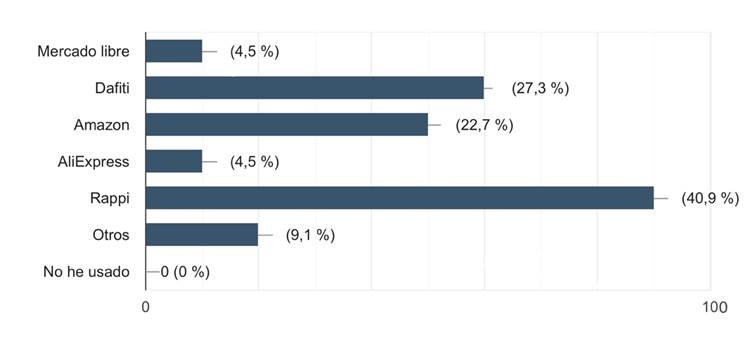
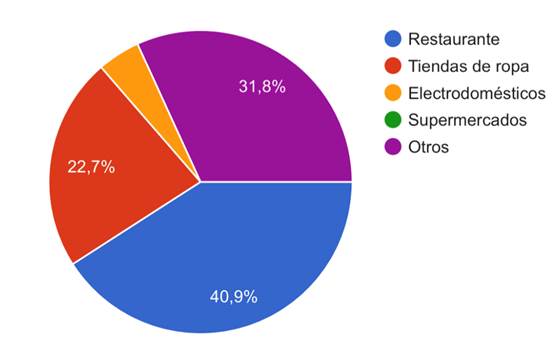
The e-commerce platforms most frequently used by young people in Barranquilla during COVID-19 were Rappi, with 40.9%, and Dafiti, with 27.3%. This shows a consumption pattern oriented toward satisfying needs related to food, clothing, and footwear. It may also be inferred that during the confinement period in Barranquilla in 2020, young people increased their purchases on these platforms in order to buy products from the comfort and safety of their homes while the virus was spreading throughout the city.
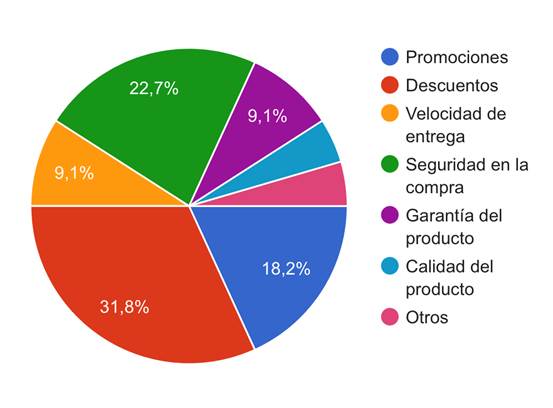
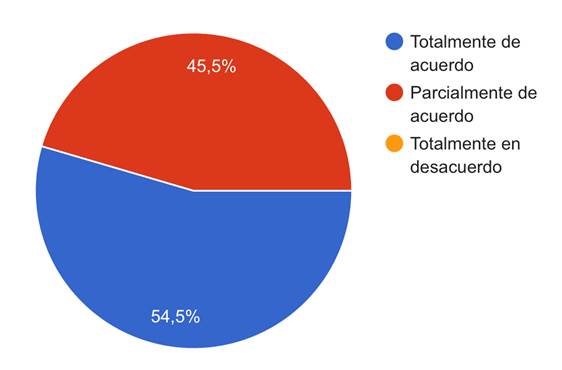
The main purchase motivations were discounts, at 31.8%, purchase security, at 22.7%, and promotions, at 18.2%. This indicates that it is important for young people in Barranquilla to feel that their purchase is protected and that the pages where they buy provide assurance that the product will arrive at its destination. Purchase decisions increase even more when companies offer discounts and promotions to their customers. Consumers seek protection for their money and, combined with effective business strategies such as promotions and discounts, young people are more likely to choose these companies to satisfy their needs.
Other relevant factors for consumers were product delivery speed, with 95.5% totally agreeing, product guarantee, also with 95.5% totally agreeing, and product quality, with 100% totally agreeing. In general, consumers seek security regarding their money, the purchasing process, and product use. Therefore, if e-commerce platforms provide security to customers, accompanied by excellent logistics to send orders as quickly as possible, and if there is a discount or another marketing strategy, young people would quickly choose to purchase and would be satisfied with the shopping experience provided by the virtual store.
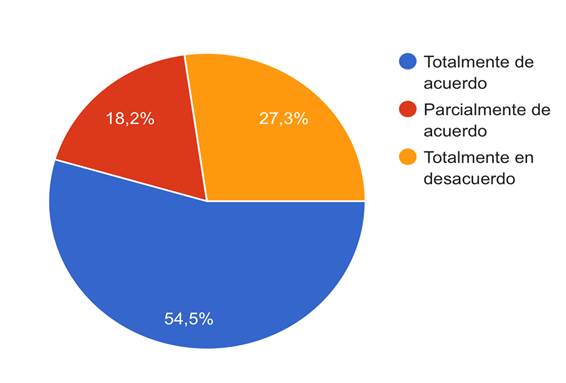
The frequency of purchases made by young people on e-commerce platforms during the pandemic shows that 54.5% of respondents totally agreed that they make weekly purchases, while 27.3% partially agreed that they make purchases during the week. This reflects a behavioral pattern in which more than half of young people make some purchases on different platforms during the week. This is not surprising, since projections for that year were already growing, and the COVID-19 pandemic was a determining factor that allowed e-commerce to grow by 300% in Latin America alone.
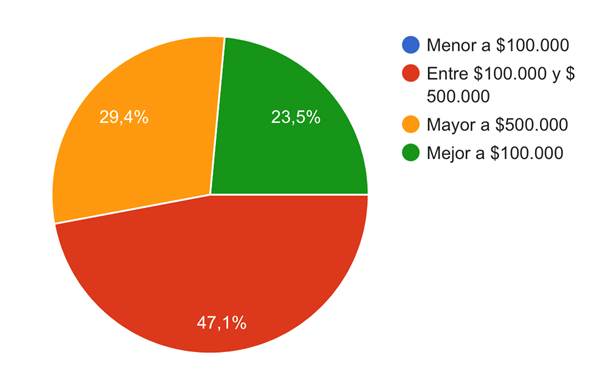
The average purchase amount ranged between COP 100,000 and COP 500,000 for 47.1% of respondents. This explains why people demand security in the electronic commerce purchasing process, since buying products valued above COP 100,000 requires young people to be certain that their order will arrive at its destination. Additionally, 29.4% reported an average purchase above COP 500,000, indicating that this population is turning to e-commerce to make high-value and important purchases. It is no longer only about ordering food; it can now involve the purchase of a car through electronic commerce.
Figure 1
 |
E-commerce platforms
Source: Authors' own elaboration.
Figure 2
Purchase categories
 |
Source: Authors' own elaboration.
Figure 3
Purchase motivation
 |
Source: Authors' own elaboration.
Figure 4
Importance of promotions
 |
Source: Authors' own elaboration.
Figure 5
Importance of discounts
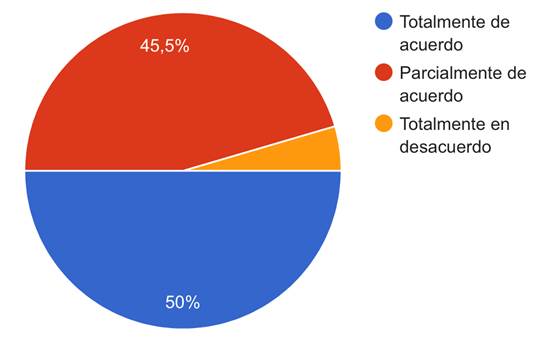 |
Source: Authors' own elaboration.
Figure 6
Importance of product delivery times
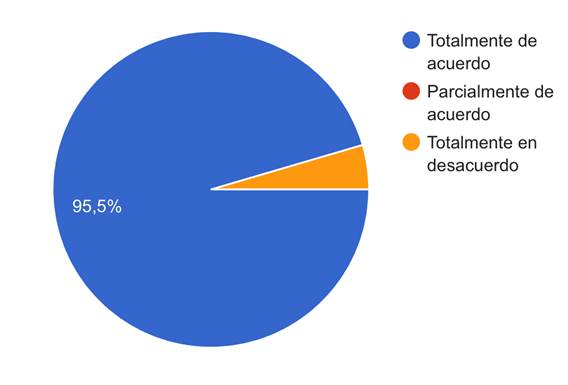 |
Source: Authors' own elaboration.
Figure 7
Importance of security in the shopping experience
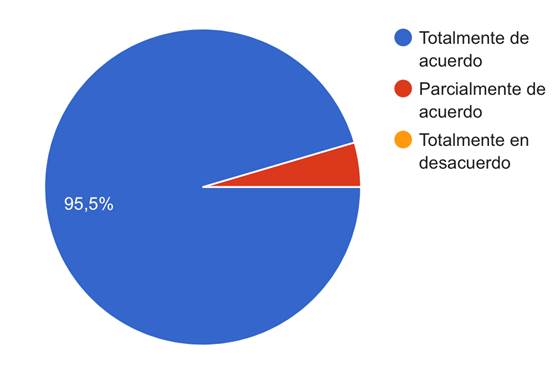 |
Source: Authors' own elaboration.
Figure 8
Importance of the product guarantee
|
Source: Authors' own elaboration.
Figure 9
Importance of product quality
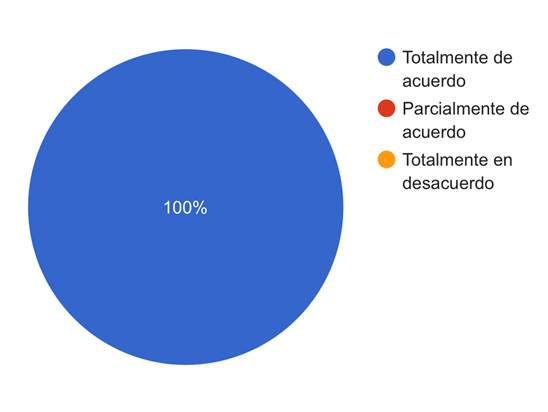 |
Source: Authors' own elaboration.
Figure 10
Frequency of platform use
 |
Source: Authors' own elaboration.
Figure 11
Average purchase amount in Colombian pesos
 |
Source: Authors' own elaboration.
CONCLUSIONS
The context created by COVID-19 strongly stimulated e-commerce worldwide, allowing Colombia to achieve exponential growth beyond the projections estimated for that year. It also became a strategic ally for companies during the pandemic, integrating itself into the value chain of many businesses.
The study found that the device most frequently used for e-commerce purchases is the mobile phone, and that companies must address two latent problems: delivery dates and product returns. Traditional commerce was displaced during confinement by electronic commerce. Although confinement was a determining factor in the increase in online purchases and sales, it should also be noted that e-commerce was already expected to experience significant growth during these years, even without anticipating a pandemic.
In conclusion, there is currently an increase in the consumption of products and services through e-commerce. At the same time, the pandemic reduced traditional commerce sales by 90%. An interesting finding is that people never stopped consuming products during the pandemic; rather, they sought to satisfy their needs through the internet.
Consumption habits and behaviors are changing. The tendency to buy products from the comfort of home, or from anywhere the consumer may be, is attractive to this generation. Therefore, shopping experiences on brand platforms are being reinvented. Innovations such as augmented reality, which allows people to see what a product would look like in their hands without touching it, and other technological advances, show that e-commerce provides companies with innovation in their value proposition.
The technological adaptation of e-commerce in digital consumption among young people from Barranquilla during the COVID-19 pandemic was accepted and incorporated into their daily consumption habits. It satisfied physiological needs inherent to the human condition, such as food and clothing, which were effectively addressed through digital platforms. This process developed efficiently through the determinants of the technology acceptance model and the theory of planned behavior. In other words, e-commerce users perceive product security, delivery times, offer value, guarantee, convenience, and other characteristic factors of these technological systems as useful, and these perceptions are positively affected by externalities that increase consumption.
Companies in the e-commerce sector are advised to conduct continuous market research in order to establish and determine the perceived usefulness of digital consumers on their platforms. Likewise, they should identify the most important criteria that drive purchase decisions and the consumer's behavioral patterns, using the foundations of the theory of planned behavior, so they can effectively and appropriately satisfy needs and increase rewarding experiences within this environment.
Acknowledgments
The authors express their gratitude to Jorge Isaac Lechuga-Cardozo for his academic support, valuable observations, and guidance during the early stages of this research.
REFERENCES
Al-Debei, M. M., Akroush, M. N., & Ashouri, M. I. (2015). Consumer attitudes toward online shopping: The effects of trust, perceived benefits, and perceived web quality. Internet Research.
Antúnez, A. M. C., Morales, C. E. B., & Araujo, D. R. S. (2019). La sostenibilidad global en una empresa de transporte urbano de viajeros en autobús: Estudio de caso. In Memorias del III Congreso internacional en administración de negocios internacionales (CIANI): Retos y oportunidades del desarrollo sostenible en los negocios internacionales (pp. 28-42). Universidad Pontificia Bolivariana.
Arrieta, L. E., & Morales, C. E. B. (2024). Necesidades sociales y dimensiones del capital social: análisis de beneficiarios de Familias en Acción. Telos: Revista de Estudios Interdisciplinarios en Ciencias Sociales, 26(2), 388-407.
Awa, H. O., Ojiabo, O. U., y Emecheta, B. C. (2015). Integrating TAM, TPB and TOE frameworks and expanding their characteristic constructs for e-commerce adoption by SMEs. Journal of Science & Technology Policy Management.
Barrera, M. B., & Morales, C. E. B. (2025). Análisis de la percepción de la cultura tributaria en Colombia durante el periodo pospandemia. Dictamen Libre, (36), 2.
Borja-Barrera, M., & Barragán-Morales, C. (2025). Perception analysis of tax culture in Colombia during the post-pandemic period. Dictamen Libre, (36).
Boudreau, K. J., & Hagiu, A. (2009). Platform rules: Multi-sided platforms as regulators. Platforms, Markets and Innovation, 1, 163-191.
Castaneda, D. H. T., & Zavala, J. G. (2012). Comercio electronico. Contribuciones a la Economía, 7, 1-12.
Correa Wachter, J. F. ., Henao Villas, C. F. ., Henao Villa, F. ., & García Arango, D. A. (2021). Análisis del aporte del aprendizaje de máquinas a la seguridad de la información. InGente Americana, 1(1), 9-20. https://doi.org/10.21803/ingecana.1.1.407
De Reuver, M., Sørensen, C., y Basole, R. C. (2018). The digital platform: a research agenda. Journal of information technology, 33(2), 124-135.
DONNA, L., y Novak, H. T. P. (1997). A new marketing paradigm for electronic commerce. The information society, 13(1), 43-54.
Espitia-Arrieta, L., Tatiana Prestan-Gómez, S., & Barragán-Morales, C. (2022). Programas de transferencias monetarias condicionadas: una comparación en América Latina frente a Familias en Acción. Dictamen Libre, (31).
Evans, D. S., & Schmalensee, R. (2016). Matchmakers: The new economics of multisided platforms. Harvard Business Review Press
Fernandez-Portillo, A., Sanchez-Escobedo, M. C., Jimenez-Naranjo, H. V., & Hernandez-Mogollon, R. (2015). La importancia de la innovacion en el comercio electronico. Universia Business Review, (47), 106-125.
Gutiérrez, A. (17 de febrero de 2022). Ventas de comercio electrónico en Colombia crecieron 40% y llegaron a $40 billones (La República). https://amp.larepublica.co/empresas/las-ventas-de-ecommerce-en-colombia-crecieron-40-y-llegaron-a-40-billones-3305200
Hein, A., Schreieck, M., Riasanow, T., Setzke, D. S., Wiesche, M., Bohm, M., & Krcmar, H. (2020). Digital platform ecosystems. Electronic Markets, 30(1), 87-98.
Hernandez, R., Fernandez, C., & Baptista, P. (2014). Metodologia de la investigacion. McGraw Hill.
Kannan, P. K. (2017). Digital marketing: A framework, review and research agenda. International journal of research in marketing, 34(1), 22-45.
Lai, P. C. (2017). The literature review of technology adoption models and theories for the novelty technology. JISTEM-Journal of Information Systems and Technology Management, 14, 21-38.
Lechuga-Cardozo, J. I., & Loaiza Piedrahita, J. A. (2025). La franquicia en los paises iberoamericanos: el caso de Colombia. In J. Ramirez-Hurtado & J. Berbel Pineda (Coords.), La franquicia en los paises iberoamericanos (pp. 191-212). Tirant Lo Blanch.
Lin, K. Y. y Lu, H. P. (2011). Why people use social networking sites: An empirical study integrating network externalities and motivation theory. Computers in human behavior, 27(3), 1152-1161.
Marangunić, N. y Granić, A. (2015). Technology acceptance model: a literature review from 1986 to 2013. Universal access in the information society, 14(1), 81-95.
Mauricio Ortiz, F. ., & García Arango, D. A. . (2021). Sistema de evaluación de proyectos integradores (sepi): análisis para su implementación en la corporación universitaria americana. InGente Americana, 1(1), 67-71. https://doi.org/10.21803/ingecana.1.1.414
Mejía, C. A., Lechuga-Cardozo, J. I. ., Narvaez-Ferrin, M. E., & Cruz Páez, F. O. (2023). The effects of Covid-19 pandemic on e-commerce in the Pacific Alliance countries. RAN - Revista Academia & Negocios, 9(2), 247-258. https://doi.org/10.29393/RAN9-18EECM40018
Morales, C. E. B., Mendoza, A. P., Barrera, M. B., & Osorio, F. M. (2024). Transformational leadership and decision-making in organizations of the Colombian Caribbean. Dictamen Libre, (34), 167-178.
Morales, C. E. B., Guarín-García, A. F., Chang-Muñoz, E. A., Villanueva-Vásquez, A., Gálvez, J. F. E., Delgado, N. A. G., & Bracho, O. C. (2025). Fuzzy-Set Qualitative Comparative Analysis to Corporate Social Responsibility Components: A Case Study from Media Print Companies in Atlántico Department of Colombia. Procedia Computer Science, 257, 1148-1153.
Mudarra-Fernández, A. B., Barragán-Morales, C. E., & González-Beleño, C. (2023). La eficiencia de las empresas con marca en los hoteles de las Ciudades Patrimonio de la Humanidad consolidadas de España. Revista Ibérica de Sistemas e Tecnologias de Informação, (E60), 624-636.
Sanabria Diaz, V. L., Torres Ramirez, L. A., & Lopez Posada, L. M. (2016). Comercio electronico y nivel de ventas en las MiPyMEs del sector comercio, industria y servicios de Ibague. Revista EAN, (80), 132-154.
Sennett, R. (2018). La cultura del nuevo capitalismo (Ed. 349). Anagrama.
Turizo, J. M., Bracho, O. C. C., & Morales, C. B. (2026). General and differential mechanisms of citizen participation: Prior consultation and victims’ participation boards. Pensamiento Americano, 19(39).
Uribe Uran, A., Lechuga Cardozo, J. I., Carvajalino Perez, C., Pisciotti Quintero, K., Payares Ayola, M., & Rodriguez Cadena, R. (2022). Transformacion digital como estrategia de fortalecimiento comercial del sector hotelero en el Caribe colombiano. Instituto Latinoamericano de Altos Estudios (ILAE).
Van Dijck, J. (2013). The culture of connectivity: A critical history of social media. Oxford University Press.
Venkatesh, V., Thong, J. Y., & Xu, X. (2012). Consumer acceptance and use of information technology: Extending the unified theory of acceptance and use of technology. MIS Quarterly, 157-178.
Venkatesh, V., Thong, J. Y., & Xu, X. (2016). Unified theory of acceptance and use of technology: A synthesis and the road ahead. Journal of the Association for Information Systems, 17(5), 328-376.
Williams, M. D., Rana, N. P., & Dwivedi, Y. K. (2015). The unified theory of acceptance and use of technology (UTAUT): a literature review. Journal of enterprise information management.