A Review of Sensory Marketing and Its Influence on Consumer Perceptions of Food Purchasing, 2025
Uma análise do marketing sensorial e da sua influência nas perceções dos consumidores relativamente à compra de alimentos, 2025.
Una revisión del marketing sensorial y su influencia en la percepción de los consumidores a la hora de comprar alimentos, 2025.
DOI: https://doi.org/10.57188/rieca.2026.008
José Eber Paz Vilchez1 * ORCID: https://orcid.org.0000-0002-1711-3795
Jimena Judith Huamán Caro * ORCID: https://orcid.org.0009-0007-0656-2732
Angela Lucia Muñoz Montoya * ORCID: https://orcid.org.0009-0005-5924-0492
Peruvian Union University, Faculty of Business Sciences. Lima, Peru
How to cite:
Tarrillo, J., Paz, J. y Huamán, S. (2026). Emotional Intelligence in Decision-Making to Help SME Employees Achieve Their Goals, Lima, 2025. RIECA, 1(1). e-008. https://doi.org/10.57188/rieca.2026.008
ABSTRACT
Sensory marketing has become an essential factor in the food industry, using visual, olfactory, tactile, and auditory stimuli to strengthen perceptions of product quality. This study aims to analyze the impact of sensory marketing in the food sector by examining how it influences consumer perception and experience and how it contributes to the creation of an emotional bond with the brand. This study is based on a narrative literature review using databases such as Scopus, SciELO, ProQuest, and Google Scholar. Scientific articles published between 2022 and 2025 on sensory marketing in the food industry were selected following a PRISMA flow diagram. A total of 118 initial articles were identified and refined to 51 for the analysis stage. The results show that sensory stimuli, especially visual and olfactory stimuli, have a significant effect on perceived food quality, increasing perceived value and consumers’ willingness to pay more. Likewise, the creation of an appropriate sensory atmosphere in distribution channels encourages consumer purchases and contributes to greater loyalty and repeat purchase behavior. It is concluded that sensory marketing is one of the most relevant strategies in the food industry. When implemented, it improves perceived product quality and helps establish an emotional relationship with consumers. Companies that implement coherent sensory strategies can differentiate themselves from competitors in a dynamic business environment by creating memorable experiences that foster loyalty.
Keywords: Sensory Marketing; Food Industry; Consumer Behavior; Customer Satisfaction; Brand Loyalty; Sensory Strategies.
JEL Code: M31, M37, D12, L15
RESUMO
marketing sensorial tornou-se um fator essencial na indústria alimentícia, utilizando estímulos visuais, olfativos, táteis e auditivos para reforçar a percepção da qualidade do produto. Este estudo tem como objetivo analisar o impacto do marketing sensorial no setor alimentício, examinando como ele influencia a percepção e a experiência do consumidor e como contribui para a criação de um vínculo emocional com a marca. Este estudo baseia-se em uma revisão narrativa da literatura, utilizando bancos de dados como Scopus, SciELO, ProQuest e Google Scholar. Foram selecionados artigos científicos publicados entre 2022 e 2025 sobre marketing sensorial na indústria alimentícia, seguindo um diagrama de fluxo PRISMA. Um total de 118 artigos iniciais foi identificado e refinado para 51 para a fase de análise. Os resultados mostram que os estímulos sensoriais, especialmente os visuais e olfativos, têm um efeito significativo na qualidade percebida dos alimentos, aumentando o valor percebido e a disposição dos consumidores em pagar mais. Da mesma forma, a criação de uma atmosfera sensorial adequada nos canais de distribuição incentiva as compras dos consumidores e contribui para uma maior fidelidade e comportamento de compra repetida. Conclui-se que o marketing sensorial é uma das estratégias mais relevantes na indústria alimentícia. Quando implementado, melhora a qualidade percebida do produto e ajuda a estabelecer uma relação emocional com os consumidores. As empresas que implementam estratégias sensoriais coerentes podem se diferenciar dos concorrentes em um ambiente de negócios dinâmico, criando experiências memoráveis que promovem a fidelidade.
Palavras-chave: Marketing Sensorial; Indústria Alimentícia; Comportamento Do Consumidor; Satisfação Do Cliente; Fidelidade À Marca; Estratégias Sensoriais.
INTRODUCTION
Sensory marketing has become an essential tool for companies and brands, particularly in the food sector. It is a relevant strategic resource because it stimulates the five senses—sight, smell, taste, touch, and hearing—to influence consumers’ emotions and purchasing decisions. The integration of multisensory experiences through visual, olfactory, tactile, auditory, and gustatory stimuli affects product perception, increases satisfaction, and creates a basis for consumer loyalty (Del et al., 2025).
Several studies have shown that sensory stimuli directly influence purchasing decisions (Toribio-Tamayo et al., 2024). For example, consumers have been found to be more likely to spend more on food products when sensory stimuli are prominent. Lighting, aromas that evoke different sensations, and music in an establishment influence consumers’ willingness to pay a higher price for the experience, often leading them to value the experience more than the product itself. This demonstrates the significant role of sensory marketing and the importance of designing sensorially attractive spaces that enhance perceived quality and increase consumers’ willingness to invest in the experience (Apaza-Panca et al., 2023).
According to Cam et al. (2025), an appropriate environment aligned with current trends and supported by a balanced aesthetic not only improves the consumer experience but also contributes to the formation of emotional bonds with the brand, thereby fostering greater loyalty. Visual marketing plays a key role in the food industry, since the way products are visually presented can determine consumer perception and directly alter expectations and purchasing decisions (Kiciak et al., 2025).
Egido (2025) also notes that the way products are presented in the space where they will be consumed is as relevant as the technical characteristics of the product itself, such as preparation and safety (Del et al., 2025). A growing body of research suggests that sensory marketing has a particularly important effect on impulsive consumers, who are exposed to emotional stimuli activated by sensory factors such as aromas and music, resulting in rapid and less rationalized purchasing decisions (Gadilkar, 2024).
In contexts such as gourmet food stores or high-end restaurants, sensory aesthetics play a decisive role because they are closely related to perceptions of quality. Consumers are also willing and expect to pay more for the sensory experience (Fatih & Çam, 2024). Likewise, the use of music in establishments has been shown to influence the speed with which consumers make purchasing decisions, since certain types of music can generate a sense of comfort and relaxation that facilitates the buying process (Castillo Placencia et al., 2025).
Positive sensory interactions in restaurants contribute to several business objectives, as they may increase the likelihood that customers will recommend the establishment to others, thereby expanding the brand’s reach through word of mouth (Mbatha et al., 2023). This type of marketing is also particularly effective when it is customized to the sensory preferences of different demographic groups, allowing brands to relate to and communicate more effectively with their target audiences (Jahroh et al., 2025).
Within the business field, marketing performs several important functions, and sensory marketing has consolidated itself as an integrated strategy that not only improves perceptions of food products but also influences consumers’ emotions and purchasing behavior. As brands seek differentiated positioning in highly competitive markets, the effective application of sensory marketing may become a critical factor in creating unique experiences that foster consumer loyalty. This article therefore examines sensory marketing in the food sector and provides a theoretical framework for understanding its relevance in contemporary commercialization.
DEVELOPMENT
The study was conducted through a narrative review of the existing literature. Searches were carried out in Scopus, Elsevier’s SciELO, ProQuest, and Google Scholar, following the methodology and guidelines of the PRISMA flow diagram. The keywords identified were sensory marketing, purchase decision, loyalty, food, restaurants, and gastronomy.
Figure 1.
Prisma Scheme

Eligibility
For this narrative review, strict eligibility criteria were established to ensure the relevance and quality of the selected articles. The studies included in the review necessarily addressed sensory marketing and its effects on the food sector. Original papers, review articles, and both theoretical and empirical studies related to the topic were selected, provided that they specifically examined the effect of sensory marketing in the food industry.
As inclusion criteria, articles indexed in recognized academic databases—Scopus, SciELO, ProQuest, and Google Scholar—were considered. Studies were included when they contained original data, whether review-based or scientific research, and when they used qualitative or quantitative approaches. Restrictions were applied regarding publication date, with no language restrictions.
Regarding exclusion criteria, articles were discarded when full text was not available, when they lacked a real database, when they did not align with the focus of this review, or when they were published outside the last five-year period. Undergraduate theses and dissertations were also excluded because of limitations related to academic quality and validity. A bibliometric analysis was also performed in VOSviewer, as shown in Figure 1.
Figure 1.
Bibliometric analysis in VOSviewer of the topics used
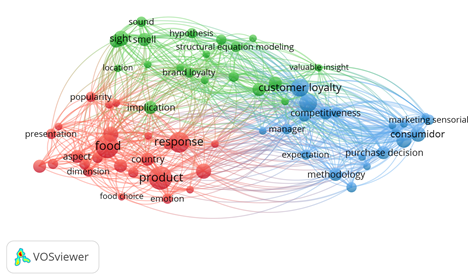
Note. Prepared based on Ospina (2021). A high correlation can be observed among the selected topics, which are continuously linked to the present study.
In this study, the selection and extraction process was carried out using a strategy supported by the PRISMA flow diagram. A total of 118 articles were initially identified in the databases mentioned above; 20 duplicate articles were removed, leaving 98 articles whose abstracts were carefully reviewed and to which the inclusion and exclusion criteria were applied. Finally, 51 articles were selected for the review stage. These articles were published between 2022 and 2025, representing the most recent literature on the impact of sensory marketing in the food sector.
This study follows a descriptive approach aimed at describing, synthesizing, and summarizing the existing literature while highlighting key and relevant data.
Impact of Visual Sensory Strategies on Purchasing Behavior
Visual sensory marketing is fundamental in the food sector because visual stimuli decisively influence purchasing, sometimes even outweighing considerations of taste or price. These visual elements can significantly affect perceived quality and the value assigned to a product before consumption.(Makwena, 2024)(Fatih & Çam, 2024)
Studies confirm that aesthetics translate into economic value: 45% of consumers are willing to pay more for products that offer an attractive visual experience. This makes packaging design a key differentiating factor that communicates authenticity and quality. On e-commerce platforms, high-quality images directly affect purchase intention and consumer trust.(Fatih& Çam, 2024)(Fatih & Çam, 2024)(Nurwitasari & Hendrayati, 2024)(Xu, 2024)
Innovative design is a driver of sales. The use of innovative colors and shapes in packaging increases the probability of purchase by 60%, because consumers associate this type of design with superior value and greater freshness. This power of visual attraction has been replicated in several retail contexts. In addition to capturing attention, design immediately communicates the identity and values of the brand, while elements such as typography affect perceptions of health and the internal attributes of food.(Makwena, 2024)(Makwena, 2024)(Cam et al., 2025)(Srisukwatanachai et al., 2025)(Shun Han et al., 2024)(Makwena, 2024; Motoki et al., 2025)
Brands can stand out in saturated markets through personalized and exclusive packaging that promotes immediate recognition. Colors are not random; they evoke emotional responses that suggest attributes such as freshness or energy, influencing satisfaction and long-term loyalty. Aesthetic presentation in service environments also drives satisfaction and revisit intention. Attractive designs not only increase conversion rates but also forge an emotional connection with the brand. Sixty-eight percent of consumers state that innovative packaging improves their perception of quality by associating the product with luxury and high standards. This enables premium brands to justify higher prices and project an aspirational image.(Makwena, 2024; Nurwitasari & Hendrayati, 2024)(Gutiérrez-Aragón et al., 2022; Srisukwatanachai et al., 2025)(Adly et al., 2025; Cam et al., 2025)(Chang et al., 2025)(Mehta et al., 2024)(Chang et al., 2025; Xu, 2024)
Aesthetics functions as an indicator of value, as superior presentation is interpreted as a sign of greater investment and, therefore, higher quality. At the point of sale, attractive product arrangement and adequate lighting enhance packaging and contribute to the purchasing decision. Visual coherence minimizes perceived risk and encourages impulsive buying behavior. Finally, visual innovation acts as a mental trigger that facilitates brand recall and future brand choice.(Chang et al., 2025)(Le et al., 2024; Quan et al., 2025)(Gadilkar, 2024; Srisukwatanachai et al., 2025)(Chang et al., 2025; Nurwitasari & Hendrayati, 2024)
Impact of Olfactory Marketing on Quality Perception
Olfactory marketing is essential for improving perceptions of food quality. The sense of smell, which is linked to emotion and memory, subconsciously influences consumer judgment. Evidence indicates that 72% of consumers directly associate pleasant aromas with freshness and quality, which strengthens loyalty.(Karhu et al., 2025)(Karhu et al., 2025)(Nurwitasari & Hendrayati, 2024)
The use of ambient aromas in stores prolongs customer stay and increases the probability of purchase. Sixty percent of consumers perceive that fresh aromas enhance quality, thereby reinforcing loyalty. In addition, smell creates a powerful emotional bond with the brand through the evocation of memories.(Skolastika et al., 2025)(Fatih & Çam, 2024)(Jahroh et al., 2025)
To be effective, the aroma must have the right intensity and congruence; a poorly aligned scent can be counterproductive. The key is for the aroma to reinforce existing expectations, and this is vital in services such as coffee shops, where it drives satisfaction and revisit intention.(Nurwitasari & Hendrayati, 2024; Zha et al., 2025)(Herrada Salazar et al., 2025)(Cam et al., 2025; Jahroh et al., 2025)
The strongest influence is multisensory: 75% of consumers achieve greater satisfaction and loyalty when pleasant aromas are combined with visual packaging. This coherent integration may even modify flavor perception through sensory transfer, improving organoleptic acceptance.(Nurwitasari & Hendrayati, 2024; Skolastika et al., 2025; Szocs et al., 2024)(Karhu et al., 2025)(Eringa & Paredes, 2022; Quan et al., 2025)
From an economic perspective, quality perceived through smell supports the acceptance of premium prices. A controlled olfactory environment reinforces long-term brand memory, acting as a sensory signature and anchor that drives positioning and profitability.(Gadilkar, 2024)(Le et al., 2024; Skolastika et al., 2025)(Egido Piqueras, 2025; Gadilkar, 2024; Karhu et al., 2025; Nurwitasari & Hendrayati, 2024)
Effects of Music and Sound on Purchasing Decisions
The effect of music and sound on purchasing decisions in food establishments is a central element of sensory marketing, which seeks to influence consumer behavior through sensory stimuli. Background music and relaxing sounds modify the environment and the mood of buyers, thereby influencing the shopping experience and perceptions of products.Cam et al., 2025)
(Makwena, 2024) indiEvidence indicates that 58% of consumers prefer places where soft and relaxing music is played while they shop. This type of musical environment positively affects mood, makes customers feel more comfortable, reduces stress, and consequently allows them to make purchasing decisions with greater calm and confidence. The emotional comfort created by music directly influences satisfaction with the experience, resulting in greater brand loyalty and a better overall impression of the establishment. This is consistent with studies showing that music can shape emotions and create pleasant atmospheres, facilitating consumers’ emotional connection with the point of sale.(Velasco et al., 2025)
According to the literature, 50% of consumers report that soft music increases the time they spend in an establishment. A longer stay provides more time to evaluate products, increasing purchasing opportunities. In the food sector, this effect is essential because the sensory experience may extend the visit and encourage the purchase of additional products or greater consumption. The study also indicates that, to maximize this effect, music selection must be aligned with the identity of the establishment. For example, instrumental or ambient music in health-food stores encourages a calm and natural atmosphere that matches the product proposition.(Mehta et al., 2024)
(Fatih & Çam, 2024)Soft genres, including classical music, reinforce the perception of luxury and quality in high-end food products. Fifty-five percent of consumers recognized that light music made them perceive products as being of higher quality, increasing their willingness to spend more on them. This can be explained by the fact that music contributes to the formation of a sensory image related to the product and helps reinforce attributes commonly associated with exclusivity, sophistication, and luxury. Complementary studies also indicate that brands using appropriate music can transmit implicit messages about excellence and care in preparation, increasing perceived value.(Gutiérrez-Aragón et al., 2022)
From a neurophysiological perspective, music influences brain regions associated with emotions and decision-making, such as the limbic system and prefrontal cortex. Emotional activation induced by pleasant music regulates the release of neurotransmitters such as dopamine, which is related to pleasure and reward and may increase the tendency to purchase. Recent studies suggest that music reduces perceived time and fatigue in retail spaces; as a result, consumers spend more time enjoying the experience.(Tran et al., 2024)
It is important for companies to use sound design strategically in their stores, since an inappropriate musical choice may produce stress and distraction. Considering factors such as musical genre, tempo, volume, and time of day, music selection helps create an experience that can be adapted to different customer profiles. Furthermore, combining music with other sensory elements—such as aromas, lighting, and textures—helps create complex multisensory experiences that support brand recall and purchase desire.
(Udo Wagner, 2024)Research on textual and sensory information on food packaging supports the idea that incorporating multisensory stimuli into packaging significantly increases consumer interaction and satisfaction, improving quality perception and further encouraging purchase intention. It also emphasizes that including textual information together with visual and tactile elements can activate multiple senses and enable more effective communication that influences the consumer sensory experience. Similarly, studies highlight that auditory stimuli must be consistent with the identity of the establishment to maintain sensory coherence and reinforce positive outcomes in purchasing behavior.(Mehta et al., 2024)
Recent research also notes that music, especially when it incorporates organic or natural sounds, can influence perceptions of freshness and naturalness of ingredients, thereby increasing purchase intention among health-conscious consumers. Similarly, aligning music with cultural or traditional rhythms can strengthen the emotional connection between consumers and local brands or native products, fostering greater affinity and loyalty.
Finally, digital platforms, including augmented reality and sound design, have been found to improve sensory perceptions, increasing young consumers’ emotional engagement and willingness to pay more for a product. This approach integrates music and sound into a multisensory and digitized context, strengthening marketing strategies for this segment.(Velasco et al., 2025)
Sensory Preferences of Young Consumers
Young consumers’ preferences, particularly those of Generation Z and Millennials, for fully immersive sensory experiences related to food products have become an important dimension of modern marketing. These consumers demand multisensory experiences from brands that stimulate not only taste but also smell, sight, and hearing, generating a deeper emotional connection and lasting commitment to the brand.
(Karhu et al., 2025)Evidence indicates that 59% of young consumers prefer products that provide immersive sensory experiences, activating multiple senses simultaneously and enriching the consumption experience. This preference reflects a clear trend toward more comprehensive and memorable consumption experiences that go beyond the product itself.
Similarly, up to 60% of these consumers would choose to pay more if the product incorporated sensory techniques in an innovative way, such as interactive packaging and digital platforms with multisensory stimuli. This shows that experience acquires a value as important as the functionality of the product. Thus, packaging should play a crucial role not only in protection but also in communicating and activating multiple senses in the same space. In addition, studies have confirmed the effectiveness of digital sensory marketing, indicating that 65% of young consumers are likely to recommend brands that implement innovative digital sensory marketing strategies. This helps brands achieve higher levels of emotional engagement and intense connection, which are determinants of customer loyalty.(Fatih & Çam, 2024)(Alwan Hanif et al., 2025)
Several studies highlight the influence of packaging design on this multisensory experience. For example, recent research indicates that tactile and visual stimuli in packaging substantially increase perceived quality and purchase intention among young consumers. It has also been emphasized that textual information, when integrated with different sensory modalities, intensifies the experience and generates deeper consumer interaction with the product.
Visual and auditory stimuli also play a key role in marketing aimed at young consumers. Elements such as jingles and striking visual designs capture their attention and increase repurchase intention. This multisensory approach not only attracts attention but also produces lasting memories associated with the brand. The use of digital technology further strengthens this effect, since augmented reality and other digital sensory tools expand the brand experience and increase young consumers’ engagement. This reveals a transition toward hybrid experiences that combine the physical and digital dimensions to enrich interaction.
At the emotional level, multisensory experiences generate positive emotions that favor brand loyalty because they create memories with which consumers can identify. This finding highlights the relevance of offering complete sensory experiences to strengthen the relationship between the brand and its audience. Sustainability and social responsibility have also become part of this dynamic. Young consumers value sensory experiences aligned with sustainable practices, which increases their positive perception of and preference for environmentally committed brands. In physical spaces, visual marketing plays a decisive role. Visual strategies at points of sale have been shown to increase attention and intention to visit, especially in popular tourist destinations where sensory interaction enhances the young public’s experience.
Finally, synesthesia—understood as the combination of senses within the sensory experience—enhances experiences in the food sector. This is especially appreciated by Millennials and Generation Z, who seek more authentic and enriching consumption experiences. Taken together, these studies reveal that young consumers’ sensory preferences are oriented toward comprehensive and innovative experiences that combine multisensory stimuli with digital technologies and sustainable values, giving rise to a consumption model based on emotion and deep interaction with the brand.
Impact of Tactile Stimuli on the Sensory Experience
Tactile stimuli have become a fundamental factor in sensory marketing applied to the food sector, since they help modify perceptions of quality, freshness, and exclusivity through packaging design, display surfaces, and direct tactile interactions. A study on dairy products indicates that rough or smooth textures in packaging increase perceived authenticity by 64% and willingness to pay by 22%, provided that tactile sensations are consistent with visual cues. In snacks and energy bars, textures that fit comfortably in the hand and do not slip improve user experience, generating an 18% higher repurchase intention among regular consumers. In baked goods, packaging that feels crunchy to the touch creates multisensory expectations that increase perceived freshness by 29%.(Tran et al., 2024)(Srisukwatanachai et al., 2025)
For gourmet coffee, tactile descriptions on packaging that evoke complex textures reinforce the artisanal narrative, reduce price sensitivity by 19%, and deepen the emotional connection with the brand. Similarly, the use of luxury tactile materials such as warm wood or textured ceramics in tourist coffee shops in Vietnam increases repurchase intention by 27% and enriches the sensory experience. In Indonesia, the incorporation of bamboo and rattan into interiors and packaging reinforces cultural identity, increasing tactile satisfaction and repeat purchases by 30%. In Europe, gastronomic spaces demonstrate the power of touch: in Bremen, Germany, cups with ergonomic grips and matte textures generate haptic memories that drive 32% more repurchases than plastic cups, while in themed restaurants, textured tablecloths and relief plates increase perceived quality by 28%.(Mehta et al., 2024)(Udo Wagner, 2024)(Cam et al., 2025)(Budiarti et al., 2025)(Jahroh et al., 2025)(Chang et al., 2025)
Direct tactile experiences also strengthen the emotional bond with food: in rural fairs in Ecuador, touching or kneading bread increases the connection between touch and emotion, fostering 35% greater community loyalty. In supermarkets, shelves with natural wood textures prolong consumer stay by 15% and stimulate impulse purchases. In digital environments, touch emerges as a sensory extension in virtual spaces; simulations that reproduce food textures increase sensory immersion by 40%, directly influencing online purchasing decisions, while delivery apps that include haptic feedback, such as vibrations when choosing bread texture, increase user satisfaction by 22%. Specific cases support these trends: Luckin Coffee in China achieved 28% more repeat visits through luxury tactile packaging, while in tourist cuisine in Oradea, Romania, real textures in utensils increased perceived authenticity by 26%. The influence of touch is also reflected across regions: bakery packaging in Peru that imitates ingredients increases perceived freshness by 30%; direct contact with rural Venezuelan food drives emotional loyalty by 33%; and healthy snacks in Spain with natural textures increase preference by 21%. In addition, textured cups in urban coffee shops in Brazil foster repurchase by 25%; natural packaging in organic foods in the United States reinforces the idea of naturalness by 29%; tactile menus in Mexico prolong decision time by 18%; and luxury textures in beverages in Turkey increase willingness to pay by 23%. Finally, the trend continues in both face-to-face and digital experiences: tactile simulations applied to virtual gastronomic environments in Chile improve immersion by 27%, while in the United Kingdom, packaging with luxury textures increases perceived quality by 31%.(Apaza-Panca et al., 2023)(Nurwitasari & Hendrayati, 2024)(Karhu et al., 2025)(Motoki et al., 2025)(Toribio-Tamayo et al., 2024); en Egipto, los empaques ergonómicos con componentes táctiles en productos funcionales aumentaron la intención de compra en un 20%(Adly et al., 2025), y en cafeterías sostenibles de Indonesia, el uso de materiales reciclados con texturas naturales fortaleció la lealtad en un 24%(Skolastika et al., 2025)(Egido Piqueras, 2025)(Haro Sosa, 2024)(Gutiérrez-Aragón et al., 2022)(Paila et al., 2023),(Mbatha et al., 2023)(Haro-Sosa et al., 2024)(Zha et al., 2025)
Flavor Marketing and Its Relationship with Customer Satisfaction
Flavor marketing plays an essential role in customer satisfaction within the food sector, since taste innovation not only improves perceived quality but also creates pleasurable experiences that remain in memory, encouraging repurchase and product recommendation. A study published in MDPI Foods on dairy products shows that unique and authentic flavors increase post-consumption satisfaction by 75%, associating complex flavor profiles with greater freshness and premium value. In snacks and energy bars, innovative flavors raise the perception of exclusivity by 68%, especially through exotic combinations of tropical fruits and spices, which fosters loyalty among young consumers. Baked products use crunchy and multifaceted flavor profiles, where toasted notes and salty touches activate several senses, increasing satisfaction by 72% and willingness to pay more for premium options. In gourmet coffee packaging, evocative flavor descriptions such as bitter cocoa or citrus reinforce the expected gustatory experience and increase repurchase intention by 70%. Tourist coffee shops in Vietnam stand out with menus offering local exotic flavors, such as coffee with cardamom and coconut, which increase sensory satisfaction by 69% and stimulate word-of-mouth recommendations. In Indonesia, fusions with native spices strengthen gustatory authenticity and loyalty by 71%. In Bremen, Germany, personalized coffee flavor profiles generate 73% hedonic satisfaction and strengthen loyalty among Generation MZ, while themed restaurants increase overall satisfaction by 76% through unique taste experiences. In rural fairs in Ecuador, authentic local flavors create an emotional connection with taste, reaching 78% satisfaction and community repurchase, while in supermarkets, seasonal flavor promotions extend the gustatory experience and increase repeat sales by 67%.(Tran et al., 2024)(Srisukwatanachai et al., 2025)(Mehta et al., 2024)(Udo Wagner, 2024)(Cam et al., 2025)(Chang et al., 2025)(Budiarti et al., 2025)(Chang et al., 2025)(Apaza-Panca et al., 2023)(Nurwitasari & Hendrayati, 2024)
In the digital field, flavor simulations in virtual reality environments increase hedonic anticipation by 65%, influencing online purchases through digital chemical profiles, while delivery apps using vivid taste descriptions increase anticipated satisfaction by 70%. Likewise, gastronomic NFTs with exclusive virtual flavors reach a potential 62% effect on digital loyalty. Specific cases reinforce these trends: Luckin Coffee in China records 75% satisfaction with innovative flavors that generate repeat visits; in tourist gastronomy in Oradea, Romania, regional flavors increase satisfaction by 72%; functional products in Egypt adapt flavors to increase satisfaction by 69%; and sustainable coffee shops in Indonesia use ecological flavors that increase gustatory loyalty by 71%. In Peru, authentic bakery flavors increase perceived quality by 74%; rural Venezuelan gastronomy, with traditional flavors, generates emotional satisfaction by 76%; and healthy snacks in Spain, by incorporating natural flavors, increase hedonic preference by 68%. In Brazil, urban coffee shops with fused flavors increase repurchase by 70%; in the United States, pure organic food flavors improve satisfaction by 73%; and in Mexico, menus with sensory descriptions prolong gustatory anticipation by 67%. In Turkey, beverages with exotic flavors increase willingness to pay by 69%; in Chile, digital gastronomic experiences with flavor simulations increase immersion by 71%; in the United Kingdom, complex flavors in premium foods increase the perception of luxury by 75%; and in Germany, sustainable coffee shops oriented toward Generation MZ increase loyalty by 72%. In Brazil, dairy products with innovative flavors also increase perceived freshness by 70%; multisensory packaging that evokes flavors improves satisfaction by 74%; coffee with ergonomic flavors increases repurchase by 68%; and functional foods with hedonic flavors increase positive perception by 71%.(Karhu et al., 2025),(Motoki et al., 2025)(Lee & Kwon, 2022)(Xu, 2024)(Skolastika et al., 2025)(Adly et al., 2025)(Skolastika et al., 2025)(Egido Piqueras, 2025)(Haro Sosa, 2024)(Gutiérrez-Aragón et al., 2022)(Paila et al., 2023)(Gadilkar, 2024)(Castillo Placencia et al., 2025)(Mbatha et al., 2023)(Haro-Sosa et al., 2024)(Zha et al., 2025)(Fatih & Çam, 2024)Quan et al., 2025)(Shun Han et al., 2024)(Kadavil & Usha, 2024)(Youssef & Spence, 2023)
In bakery products, crunchy flavors increase consumer expectations by 73%, while snacks with natural flavors increase preference by 69%. Tactile menus with flavor descriptions prolong purchasing decisions by 67%; gourmet coffee with premium flavors increases loyalty by 75%; healthy foods with tactile flavors raise perception by 72%; and dairy flavors reinforce the feeling of freshness by 70%. Finally, in the premium food segment, tactile flavors increase the perception of luxury by 74%. In conclusion, flavor marketing functions as a key hedonic driver within sensory strategies, generating emotional satisfaction, perceptions of authenticity, and lasting loyalty in both physical and digital contexts, with constant impacts on consumer behavior ranging from 62% to 78%.(Gutiérrez-Aragón et al., 2022)(Palacio Pereira & Vélez Ochoa, 2025)(Le et al., 2024)(Santos et al., 2025)(Kiciak et al., 2024)(Isaac et al., 2023)(Szocs et al., 2024)
The Role of Brand Loyalty through Sensory Marketing
Sensory marketing is a crucial tool not only for activating immediate purchase but also for building deep and emotional brand loyalty. The coherent and integrated activation of the senses creates an anchor that turns rational preference into stable loyalty that is difficult for competitors to disrupt. Loyalty is based on sensory integration and hedonic value. Studies have found that satisfaction and enjoyment (hedonic value) derived from consistent sensory stimulation positively influence the overall attitude toward the brand, which is essential for loyalty. They also indicate that the strategic management of sensory attributes such as aroma and texture is vital for generating brand trust, a direct precursor of loyalty.(Srisukwatanachai et al., 2025)(Srisukwatanachai et al., 2025)
Innovation and sensory coherence are essential for sustaining loyalty over time. The perception of a “new” or renewed sensory experience notably increases loyalty and the likelihood of repeat purchases. To preserve this positive perception, coherence is essential: consistency among all of the brand’s sensory stimuli—sight, sound, and aroma—is decisive for generating a memorable and positive brand experience. This capacity to create an emotional connection is reflected in perceived authenticity. Comprehensive sensory experiences make consumers perceive the brand as more authentic and valuable, increasing both recommendation and loyalty.(Gadilkar, 2024)(Skolastika et al., 2025)(Gutiérrez-Aragón et al., 2022)
Loyalty is strengthened through a holistic experience at every point of contact. Sensory elements of the environment, such as visual design, soundscaping, and aromatherapy, are decisive in encouraging consumers to revisit an establishment. Research also indicates that visual stimuli in the store environment directly influence the intention to return. Perceived sensory quality acts as a strong indicator of satisfaction and fosters transactional loyalty. This loyalty also includes aesthetic enjoyment: the sensory beauty of a product or its packaging increases emotional attachment and, consequently, loyalty. Multisensory and distinctive experiences are therefore fundamental to engagement and retention. Finally, designing brand experiences that connect emotionally through the senses is an effective strategy for consolidating long-term loyalty.(Jahroh et al., 2025)(Cam et al., 2025)(Fatih & Çam, 2024)
CONCLUSION
The reviewed studies consistently show that sensory marketing plays an essential role in how consumers perceive, feel, and act within the food market. The visual dimension stands out as one of the most influential, since colors, shapes, and graphic elements of packaging generate immediate expectations regarding product freshness, quality, and authenticity. Studies such as those by Wagner and Steiner (Udo Wagner, 2024) and Nguyen (Cam et al., 2025) indicate that well-designed visual stimuli increase attention, facilitate recall, and strengthen brand preference.
Regarding the olfactory dimension, several authors argue that congruent aromas increase familiarity and awaken positive emotions that influence food choice. The studies compiled by Laato et al. (Karhu et al., 2025) show that appropriate aromas generate emotional connections capable of increasing satisfaction and even consumers’ willingness to pay a higher price. Complementarily, auditory marketing also has a relevant impact. According to Kiciak et al. (Gadilkar, 2024), music and sounds influence consumption rhythm, modify emotional states, and create a sensory environment that conditions preferences.
In the case of the tactile dimension, texture, weight, and packaging feel operate as symbolic cues of quality and naturalness. Apaza-Panca (Gutiérrez-Aragón et al., 2022) indicates that warm and pleasant materials communicate authenticity and increase perceived product value. Finally, taste constitutes the core of the food experience. Flavors, together with cultural and emotional factors, generate a direct affective bond with the product, a finding supported by studies published in MDPI (Srisukwatanachai et al., 2025), which highlight that coherence among flavor, aroma, and appearance increases consumer satisfaction and loyalty.
The findings suggest that sensory marketing substantially affects how people purchase food products. When it is applied strategically and consistently, clear effects can be observed: it modifies perceptions of quality, influences satisfaction during purchase, affects willingness to pay a higher price, and improves loyalty over time. By integrating visual, olfactory, auditory, tactile, and gustatory stimuli, companies achieve more than sales; they create strong emotional associations that go beyond the transaction and strengthen brand positioning.
In both physical and online stores, sensory marketing operates as a form of communication that appeals to consumers’ cognition and emotions. In physical environments, tactile and visual experiences make products seem more authentic and of higher quality. In digital environments, images and sensory narratives help compensate for the absence of direct sensory contact, increasing confidence and purchase intention. This demonstrates that sensory marketing is adaptable to markets that are increasingly technological and oriented toward personalization.
From a strategic perspective, sensory marketing is a key instrument for sustainable differentiation. It links emotions with responsible consumption. The use of environmentally friendly materials, authentic aromas, and genuine flavors introduces ethical meanings into the purchasing experience and responds to current consumer expectations. Thus, sensory marketing not only improves the perception of a product but also communicates the seriousness of brands in relation to authenticity and responsibility.
Future research should further examine multisensory experiences integrated with emerging technologies, such as augmented reality and advanced haptic simulation. Such studies would allow researchers to observe consumers’ sensory responses in real time and to analyze how sensory cues influence physiological reactions and purchasing decisions. These tools could improve communication strategies across different channels.
In summary, sensory marketing brings together science, practice, and emotion. This integration is essential for competitiveness in the food industry. The objective is not only to change product perception but also to create a comprehensive experience. In this way, brands do more than generate economic returns; they create meanings and emotions that strengthen their relationship with contemporary consumers, who seek authenticity, connection, and memorable moments.
Author statement: The authors approve the final version of the article.
Conflict of interest statement: The authors declare that they have no conflict of interest.
Author contributions:
- Conceptualization: Jimena Judith Huamán Caro
- Data curation: José Eber Paz Vilchez
- Formal analysis: Angela Lucia Muñoz Montoya:
- Research: José Eber Paz Vilchez
- Methodology: Jimena Judith Huamán Caro
- Writing: Angela Lucia Muñoz Montoya:
- Writing: José Eber Paz Vilchez
Funding: This work received no funding.
REFERENCES
Acosta-Tzin , J. V., Raudales-Garcia , E. V., & Aguilar-Hernández, P. A. (2023). Análisis bibliométrico de la investigación sobre innovación empresarial . Ad-Gnosis, 12(12), 1-14. https://doi.org/10.21803/adgnosis.12.12.614
Adly, S., Sheikh, E., & Nafez, Z. (2025). The Effect of Sensory Marketing on Brand Loyalty: The Mediating Role of Customer Experience Applied to Cafes. MSA-Management Science Journal ISSN, 4(3), 2025–2114. https://doi.org/10.21608/msamsj.2025.398961.1113
Alwan Hanif, M., Rahman, N., Studi Ilmu Komunikasi, P., Ilmu Sosial dan Ilmu Politik, F., Muhammadiyah Hamka, U., & Jakarta Selatan, K. (2025). Komunikasi Persuasif Coffee Shop melalui Strategi Experiential Marketing. Jurnal JTIK (Jurnal Teknologi Informasi Dan Komunikasi), 3(1), 378–388. https://doi.org/:https://doi.org/10.35870/jtik.v9i1.3356
Antúnez, A. M. C., Morales, C. E. B., & Araujo, D. R. S. (2019). La sostenibilidad global en una empresa de transporte urbano de viajeros en autobús: Estudio de caso. In Memorias del III Congreso internacional en administración de negocios internacionales (CIANI): Retos y oportunidades del desarrollo sostenible en los negocios internacionales (pp. 28-42). Universidad Pontificia Bolivariana.
Apaza-Panca, C. M., Martínez Nole, I. V., & Ortiz Calopino, A. B. (2023). Sensory marketing and purchase decision in Peruvian restaurants. Revista Venezolana de Gerencia, 28(10), 1435–1447. https://doi.org/https://doi.org/10.52080/rvgluz.28.e10.34
Arrieta, L. E., & Morales, C. E. B. (2024). Necesidades sociales y dimensiones del capital social: análisis de beneficiarios de Familias en Acción. Telos: Revista de Estudios Interdisciplinarios en Ciencias Sociales, 26(2), 388-407.
Barrera, M. B., & Morales, C. E. B. (2025). Análisis de la percepción de la cultura tributaria en Colombia durante el periodo pospandemia. Dictamen Libre, (36), 2.
Borja-Barrera, M., & Barragán-Morales, C. (2025). Perception analysis of tax culture in Colombia during the post-pandemic period. Dictamen Libre, (36).
Budiarti, L., Feri Wijayanti, R., Narasuci, W., Unarto, T., Negeri Malang, P., Malang, K., & Timur, J. (2025). THE ROLE OF MULTISENSORY MARKETING ON CUSTOMER LOYALTY OF CONVENIENCE STORES. Jurnal Ilmu Manajemen (JIMMU), 10, 136–149. https://doi.org/https://doi.org/10.33474/jimmu.v10i1.23469
Cam, T. D., Le Truc, C., Thai, C. N., Thanh, H. T., Mai, C. N. T., & Hoang, T. T. (2025). The effect of visual marketing on customer attention and revisit intentions at coffee shops in popular tourist destinations in Vietnam. Innovative Marketing, 21(3), 47–59. https://doi.org/10.21511/im.21(3).2025.04
Castillo Placencia, F. A., Lindao Narváez, H. Y., Feijoo Jaramillo, I. M., & Sarmiento Chugcho, C. B. (2025). El papel que juega el Marketing Sensorial en la decisión de compra de las heladerías. Revista Universidad de Guayaquil, 139(1), 31–44. https://doi.org/10.53591/rug.v139i1.1255
Chang, M. Y., Huang, C. X., Lin, I. K., & Chen, H. S. (2025). Exploring Product Innovation and Consumer Attitudes in Molecular Gastronomy: Marketing Insights for the Gourmet Food Industry. Foods, 14(2). https://doi.org/10.3390/foods14020209
Egido Piqueras, M. (2025). Neuromarketing sensorial: el impacto de los sentidos en el comportamiento del consumidor. Revista de Ciencias de La Comunicación e Información, 30, 1–22. https://doi.org/10.35742/rcci.2025.30.e315
Espitia-Arrieta, L., Tatiana Prestan-Gómez, S., & Barragán-Morales, C. (2022). Programas de transferencias monetarias condicionadas: una comparación en América Latina frente a Familias en Acción. Dictamen Libre, (31).
Eringa, K., & Paredes, V. C. P. (2022). Sensory marketing and gastronomy: the case of Ecuadorian haute cuisine restaurants. Research in Hospitality Management, 12(3), 235–246. https://doi.org/10.1080/22243534.2023.2202485
Fatih, M., & Çam, S. (2024). The Effect of Coffee Chain Customers’ Need to Smell on Their Taste Evaluations. International Journal of Contemporary Economics and Administrative Sciences, 149–168. https://doi.org/10.5281/zenodo.13923615
Gadilkar, J. (2024). Impact of Sensory Marketing on Consumer Behaviour: Gender Differences in Aroma, Music, and Visual Aesthetic Preferences in Coffee Shops. In IJFMR240528044 (Vol. 6, Issue 5). https://doi.org/doi.org/10.36948/ijfmr.2024.v06i05.28044
Gutiérrez-Aragón, Ó., Berbel Giménez, G., Copeiro-Fernández, M., & Linde-Gomis, I. (2022). Impacto del marketing sensorial en decisiones del turista gastronómico en restaurantes. Redmarka. Revista de Marketing Aplicado, 26(2), 136–154. https://doi.org/10.17979/redma.2022.26.2.9224
Haro Sosa, G. H. Á. D. A. V. B. V. D. P. F. P. R. (2024). Influencia del marketing sensorial en el comportamiento del consumidor de alimentos y bebidas. Polo Del Conocimiento. https://doi.org/10.23857/pc.v9i1
Haro-Sosa, G., Moliner-Velázquez, B., Gil-Saura, I., & Fuentes-Blasco, M. (2024). Influence of Electronic Word-Of-Mouth on Restaurant Choice Decisions: Does It Depend on Gender in the Millennial Generation? Journal of Theoretical and Applied Electronic Commerce Research, 19(1), 615–632. https://doi.org/10.3390/jtaer19010033
Herrada Salazar, S. V., Valdivia Meza, G. K., Rivera López, C. D. P., & Callan Bacilio, R. (2025). Experiential marketing and purchase decisions: beyond the taste. Revista Venezolana de Gerencia, 30(110), 1132–1145. https://doi.org/10.52080/rvgluz.30.110.22
Isaac, N., Keelson, S. A., & Yiadom, E. B. (2023). The Effect of Multi-Sensory Marketing on Non-Economic Performance of Ghana’s Restaurants. OALib, 10(06), 1–31. https://doi.org/10.4236/oalib.1109655
Jahroh, S., Hasanah, N., & Syafira, D. M. (2025). CONSUMER PREFERENCES IN CHOOSING A COFFEE SHOP IN THE CITY OF BREMEN, GERMANY. Journal of Technology and Operations Management, 20(2), 86–104. https://doi.org/10.32890/jtom2025.20.2.7
Kadavil, R., & Usha, M. (2024). Exploring the influence of sensory brand recognition on brand loyalty within the quick service restaurant industry: an analysis of branded food retailers in Kerala. Salud, Ciencia y Tecnologia - Serie de Conferencias, 3. https://doi.org/10.56294/sctconf2024899
Karhu, N., Rantala, J., Farooq, A., Sand, A., Pennanen, K., Lappi, J., Nayak, M., Sozer, N., & Raisamo, R. (2025). The effects of haptic, visual and olfactory augmentations on food consumed while wearing an extended reality headset. Journal on Multimodal User Interfaces, 19(1), 37–55. https://doi.org/10.1007/s12193-024-00447-8
Kiciak, A., Staśkiewicz-Bartecka, W., Kuczka, N., Bielaszka, A., Tudrej, M., Kowalski, O., & Kardas, M. (2024). Exploring Culinary Tourism and Female Consumer Preferences for Selected National Cuisines in Poland: A Sensory and Preference Analysis of Food Products from Four Countries. Foods, 14(1), 73. https://doi.org/10.3390/foods14010073
Le, N., Mai, N. T. B., Nguyen, N. Y. T., & Vu, H. N. T. (2024). Multi-Sensory Marketing and Impulsive Buying Behavior: The Role of Impulsive Buying Traits. Emerging Science Journal, 8(5), 1764–1782. https://doi.org/10.28991/ESJ-2024-08-05-05
Lee, J., & Kwon, K. H. (2022). Sustainable and Safe Consumer Experience NFTs and Raffles in the Cosmetics Market after COVID-19. In Sustainability (Switzerland) (Vol. 14, Issue 23). MDPI. https://doi.org/10.3390/su142315718
Makwena, T. N. (2024). How Taste and Ambience Shape Consumer Perceptions — Sensory Marketing in Fine Dining. Frontiers in Management Science, 3(6), 42–45. https://doi.org/10.56397/fms.2024.12.07
Mbatha, V. D., Koopman, A., & Chuchu, T. (2023). Examining the Impact of Sensory Marketing on Young Consumers: A McDonald’s Case Study. International Review of Management and Marketing, 13(3), 16–24. https://doi.org/10.32479/irmm.14320
Mehta, A., Serventi, L., Kumar, L., Morton, J. D., & Torrico, D. D. (2024). Packaging, perception, and acceptability: a comprehensive exploration of extrinsic attributes and consumer behaviours in novel food product systems. In International Journal of Food Science and Technology (Vol. 59, Issue 10, pp. 6725–6745). John Wiley and Sons Inc. https://doi.org/10.1111/ijfs.17463
Morales, C. E. B., Guarín-García, A. F., Chang-Muñoz, E. A., Villanueva-Vásquez, A., Gálvez, J. F. E., Delgado, N. A. G., & Bracho, O. C. (2025). Fuzzy-Set Qualitative Comparative Analysis to Corporate Social Responsibility Components: A Case Study from Media Print Companies in Atlántico Department of Colombia. Procedia Computer Science, 257, 1148-1153.
Morales, C. E. B., Mendoza, A. P., Barrera, M. B., & Osorio, F. M. (2024). Transformational leadership and decision-making in organizations of the Colombian Caribbean. Dictamen Libre, (34), 167-178.
Morales, C. E. B., De Moya, F. E. M., Vélez, N. S., & Vargas, E. C. (2023). Innovación social: Una aproximación desde su relación con la responsabilidad social empresarial en tiempos del COVID 19. In Investigación y Desarrollo (pp. 137-150). Fondo Editorial CIIDIES.
Motoki, K., Park, J., & Togawa, T. (2025). The Role of Sensory Cues in Promoting Healthy Eating: A Narrative Synthesis and Gastronomic Implications. Gastronomy, 3(2), 6. https://doi.org/10.3390/gastronomy3020006
Mudarra-Fernández, A. B., Barragán-Morales, C. E., & González-Beleño, C. (2023). La eficiencia de las empresas con marca en los hoteles de las Ciudades Patrimonio de la Humanidad consolidadas de España. Revista Ibérica de Sistemas e Tecnologias de Informação, (E60), 624-636.
Nurwitasari, A., & Hendrayati, H. (2024). Implications of Sensory Marketing of Indonesian Culinary Fine Dining on Customer Satisfaction. Advances in Economics, Business and Management Research, 762–769. https://doi.org/10.2991/978-94-6463-443-3_101
Paila, N. F., Nelwan, O. S., & Dotulong, L. O. H. (2023). PENGARUH BUDAYA ORGANISASI GAYA KEPEMIMPINAN DAN PENGEMBANGAN KARIR TERHADAP KEPUASAN KERJA PEGAWAI PT. BANK RAKYAT INDONESIA (PERSERO) TBK. PUSAT KANTOR CABANG MANADO THE INFLUENCE OF ORGANIZATIONAL CULTURE LEADERSHIP STYLE AND CAREER DEVELOPMENT ON EMPLOYEE SATISFACTION AT PT. BANK RAKYAT INDONESIA (PERSERO) TBK. PUSAT KANTOR CABANG MANADO. Jurnal EMBA, 11(1), 1400–1409. https://doi.org/https://doi.org/10.35794/emba.v11i1.47540
Palacio Pereira, I., & Vélez Ochoa, C. (2025). Incidencia y exploración sensorial en consumidores de café regional. Sosquua, 7(1). https://doi.org/10.52948/sosquua.v7i1.1170
Quan, L., Han, H., Ariza-Montes, A., Ryu, H. B., & Yu, J. (2025). Emerging nature café: Boosting customer quality of life, emotional well-being, and positive approach behavior. Acta Psychologica, 254. https://doi.org/10.1016/j.actpsy.2025.104845
Santos, M. A., Dopico-Parada, A., & Cabanelas, P. (2025). Cooking unforgettable experiences: sensory marketing in slow food restaurants. European Journal of Management and Business Economics. https://doi.org/10.1108/EJMBE-05-2024-0174
Shun Han, K., Abdul Rahman, A. R., Tamby Chik, C., & Jaafar, S. N. (2024). UNIVERSITY STUDENTS’ ONLINE FOOD DELIVERY (OFD) USAGE INTENTION: INVESTIGATING THE ROLE OF SENSORY MARKETING AND PERCEIVED BENEFITS. Journal of Nusantara Studies (JONUS), 9(2), 297–317. https://doi.org/10.24200/jonus.vol9iss2pp297-317
Skolastika, F., Daud, I., Afifah, N., & Juniawati. (2025). The Effect of Sensory Marketing and Audio Branding on Repurchase Intention Mediated by Brand Experience. Ilomata International Journal of Management, 6(2). https://doi.org/10.61194/ijjm.v6i2.1524
Srisukwatanachai, T., Jiang, B., Boonkong, A., Kassoh, F. S., & Senawin, S. (2025). The Impact of Sensory Perceptions and Country-of-Origin Practices on Consumer Preferences for Rice: A Comparative Study of China and Thailand. Foods, 14(4). https://doi.org/10.3390/foods14040603
Szocs, C., Abell, A., Ruzeviciute, R., Kim, Y., & Biswas, D. (2024). Contextual effects of color on food choices: Red ambient color induces indulgence. Journal of Consumer Psychology. https://doi.org/10.1002/jcpy.1445
Toribio-Tamayo, G., Rojas-Rosales, J. B., Martínez-Torres, D. C., Robles-Fabian, D. A., & Cordova-Buiza, F. (2024). SENSORY MARKETING AND PURCHASING BEHAVIOR LINKING COFFEE FAMILIES’ CULTURE WITH THE CONSUMER. Geojournal of Tourism and Geosites , 54, 896–905. https://doi.org/10.30892/gtg.542spl13-1264
Tran, H., Veflen, N., Jørgensen, E. J. B., & Velasco, C. (2024). Multisensory Food Experiences in Northern Norway: An Exploratory Study. Foods, 13(13). https://doi.org/10.3390/foods13132156
Turizo, J. M., Bracho, O. C. C., & Morales, C. B. (2026). General and differential mechanisms of citizen participation: Prior consultation and victims’ participation boards. Pensamiento Americano, 19(39).
Udo Wagner, D. of M. and I. B. U. of V. A. (2024). Textual Information on Food Packaging Addressing Several Sensory Modalities. Food & Nutrition Journal, 9(2). https://doi.org/10.29011/2575-7091.100206
Velasco, C., Petit, O., & Veflen, N. (2025). Multisensory Food Experiences Throughout the Customer Journey. In Reference Module in Food Science. Elsevier. https://doi.org/10.1016/b978-0-443-29139-5.00025-2
Xu, Z. (2024). A Study on Marketing Strategies of Consumer Psychology and Behavior: The Case of Luckin Coffee. Advances in Economics, Management and Political Sciences, 60(1), 117–127. https://doi.org/10.54254/2754-1169/60/20231177
Youssef, J., & Spence, C. (2023). Gastromotive dining: Using experiential multisensory dining to engage customers. International Journal of Gastronomy and Food Science, 31. https://doi.org/10.1016/j.ijgfs.2023.100686
Zha, D., Foroudi, P., Melewar, T. C., & Jin, Z. (2025). Examining the Impact of Sensory Brand Experience on Brand Loyalty. Corporate Reputation Review, 28(1), 14–42. https://doi.org/10.1057/s41299-023-00175-x