 |
INTRODUCTION
Assessment of the growth performance of cultured African catfish (Clarias gariepinus Burchell, 1822)
Evaluación del rendimiento de crecimiento del bagre africano de cultivo (Clarias gariepinus Burchell, 1822)
Ijeoma Patience Oboh1; Ukpamufo Cyril Olowo1; Nkonyeasua Kingsley Egun1*
1 TETFund Centre of Excellence in Aquaculture and Food Technology, University of Benin, Benin city. Nigeria.
* Corresponding Author: kingsley.egun@uniben.edu (N. K. Egun).
ORCID of the authors:
I. P. Oboh: https://orcid.org/0000-0001-8868-204X U. C. Olowo: https://orcid.org/0000-0003-2488-590X
N. K. Egun: https://orcid.org/0000-0001-5612-4166
ABSTRACT
Fish morphometric studies is an important tool in the stock assessment and productivity estimation of aquaculture systems. The aim of the study was to assess the growth performance of Clarias gariepinus cultured in plastic tanks. Morphometric data were collected and analysed to establish the length-weight relationship (LWR) and assess the overall health condition through the condition factor (K). A total of 540 specimens were studied across nine tanks over a three-month period (September to November 2024). Results showed mean standard length of 30.03 cm and mean body weight of 334.07 g. The obtained overall growth coefficient (b) of 3.155 and mean condition coefficient (K) value of 1.102 is indicative of positive allometric growth and a healthy physiological condition of the fishes. These findings indicate that the exogenous culturing factors of feeding efficiency and water quality management practices utilized for plastic tank culturing of C. gariepinus is suitable for fish growth. This study has contributed to the body of knowledge on the successful culturing of C. gariepinus to marketable size in plastic-tanks; and has provided data for comparison with other culturing facilities.
Keywords: Body weight; Standard length; condition factor; plastic-tank culturing; Clarias gariepinus.
RESUMEN
Los estudios morfométricos de peces son una herramienta importante para la evaluación de poblaciones y la estimación de la productividad en sistemas acuícolas. El objetivo de este estudio fue evaluar el crecimiento de Clarias gariepinus cultivado en tanques de plástico. Se recopilaron y analizaron datos morfométricos para establecer la relación longitud-peso (RLP) y evaluar el estado general de salud mediante el factor de condición (K). Se estudiaron 540 ejemplares en nueve tanques durante un período de tres meses (de septiembre a noviembre de 2024). Los resultados mostraron una longitud estándar promedio de 30,03 cm y un peso corporal promedio de 334,07 g. El coeficiente de crecimiento general (b) obtenido (3,155) y el coeficiente de condición promedio (K) (1,102) indican un crecimiento alométrico positivo y un buen estado fisiológico de los peces. Estos hallazgos indican que los factores de cultivo exógenos, como la eficiencia de la alimentación y las prácticas de manejo de la calidad del agua utilizadas para el cultivo de C. gariepinus en tanques de plástico, son adecuados para el crecimiento de los peces. Este estudio contribuye al conocimiento sobre el cultivo exitoso de C. gariepinus hasta alcanzar el tamaño comercial en tanques de plástico, y ha proporcionado datos para compararlos con otras instalaciones de cultivo.
Palabras clave: Peso corporal; Longitud estándar; Factor de condición; Cultivo en tanques de plástico; Clarias gariepinus.
Received: 05-04-2026.
Accepted: 16-05-2026.
|
INTRODUCTION
Growth in fishes is predominantly characterized as the increase in body size and weight over a period of time. Fish morphometry is the quantitative analysis of variability in the shape and size of fishes, which are very important for the study of biology of fishes (Yadav & Paul, 2023). The morphometric characteristics of fish are phenotypically plastic and very sensitive to environmental changes as they show variability in response to changes in their habitat and at different stages of their lives. Studies of fish morphometric characteristics have emerged as one of the important commonly used and cost-effective practical approach for understanding their biology, describing the status of fish population, predicting their potential for fisheries, and can be used effectively in stock classification and assessment of congeneric species (Gurkan & Innal, 2018; Kuebutornye et al., 2019; Flinn & Midway, 2021; Yadav & Paul, 2023).
Derived indices such as the length – weight relationship (LWR) and condition factor have been shown to be useful in providing valuable insights into fish population health, growth patterns, and ecological adaptations both in the wild and in captivity (Fagbuaro et al., 2015; Yerima and Usman, 2020; Ainsworth et al., 2024; Amponsah, 2025; Choure et al., 2025). Understanding of LWR is beneficial for comparing fish populations across different water bodies and environmental conditions, with variations in LWR often indicative of changes in food availability, habitat quality, and fishery management practices (Khillare & Khandare, 2020; Odeyemi et al., 2025). High condition factors indicate good health and efficient nutrient utilization by fishes, while low values suggest that the fish are confronted with physiological and environmental stressors (Kamble et al., 2024; Langi et al., 2024). Species-specific variations in condition factor and LWR indices emphasizes the need for tailored management strategies in aquaculture practice, as ideal values vary across species, life stages, and environmental conditions. By integrating LWR data with other biological parameters such as condition factors, fishery managers and aqua-culturists can make informed decisions about stocking density, harvesting size, and conservation measures.
Aquaculture practice has emerged as an important sector in global food production and nutrition security, as it has provided consumers with all-year-round access to aquatic products that are rich in proteins and macronutrients (Belton et al., 2020; Maulu et al., 2022). Properly managed aquaculture systems promote higher condition factor values and better disease resistance in fishes, whereas poor conditions lead to decline in condition factors signaling metabolic or health issues with the fishes (Muchlisin et al., 2010; Han et al., 2024). Tank-based aquaculture involves the cultivation of fish under controlled environments using tanks instead of traditional earthen ponds or open water systems, which provides more efficient and sustainable fish production by allowing precise control over water quality, temperature, and feeding regimes (Mota et al., 2022). In tank-based aquaculture, the condition factor serves as a measure of management effectiveness, as it is influenced by exogenous factors such as water temperature, dissolved oxygen content, feed quality and tank colour (Froese & Pauly, 2011; Ngo et al., 2024).
The African catfish (Clarias gariepinus, Burchell, 1822) has become an important fish species in aquaculture production and addressing protein deficiencies in human nutrition in Nigeria and many regions of Africa (Fagbuaro et al., 2015; Onyekwelu et al., 2021; Egun and Oboh, 2022; Egun et al., 2022). The physiological attributes of C. gariepinus in withstanding handling stress, high growth rate, yield potential, fecundity, cultural acceptance and palatability in Nigeria, has seen the fish species become the most cultured freshwater fish in Nigeria (Ayo-Olalusi, 2014: Egun et al., 2024). Earlier studies on the growth performance of C. gariepinus have focused largely on captured species from freshwater bodies (Davies et al., 2013; Olopade et al., 2015; Getso et al., 2017; Eze et al., 2020; Shittu and Oguntoye, 2020). However, the increasing production of C. gariepinus under diverse aquaculture rearing facilities and conditions (Ayo-Olalusi, 2014; Fagbuaro et al., 2015; Eneh & Okoro, 2021; Adeboye & Fashina, 2022; Abubakar & Lawal; 2023), and the readily appeal of morphometric features to fish farmers in making business decisions on return on investment, has necessitated the need for routine assessment of growth performance of fish species cultured in various media for sustainable aquaculture development and effective fishery management. Therefore, this study assesses the growth performance of tank-raised C. gariepinus using morphometric parameters and identified their inter-relationship trends, which aims to describe the relationship of growth characteristics based on observational design.
METHODOLOGY
Study location
This study was carried out at the Grow Out Unit facility of the TETFund Centre of Excellence in Aquaculture and Food Technology situated in the University of Benin, Benin City, Nigeria. The facility used for the study were the installed black plastic tanks, with a capacity of 6,000 L each, and stocking density of 600 fingerlings of Clarias gariepinus per tank (Plate 1) (Figure 1). Groundwater from a borehole within the facility ensured the consistent availability of water supply for aquaculture.
Study setup
For the study, nine (9) units of the plastic tanks were monitored for growth parameters. Each of the tanks were stocked with 200 C. gariepinus fingerlings and cultured to table size (500 – 1000 g for weight and 25 – 35 cm for total length) using commercial fish feeds from July to November 2024. No growth inducing hormone/treatment was administered to the fishes throughout the study.
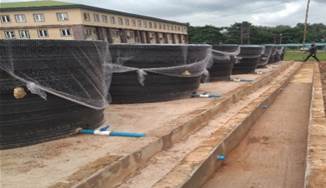
Figure 1. Plate 1: Plastic Tanks at the Grow Out Unit of the TETFund Centre of Excellence in Aquaculture and Food Technology situated in the University of Benin, Benin City, Nigeria.
Collection of morphometric data
Twenty (20) fish specimens were randomly collected per tank for morphometric measure-ments monthly from September to November 2024. Morphometric data measurements for total length (TL), standard length (SL), head length (HL) and body weight (BD) were taking using a measuring board with attached tape to the nearest 0.1 cm. The weight of the fish was taken individually using a mechanical weighing balance to the nearest 0.1 g.
Length-weight Relationship (LWR): this was determined using the equation
W = aLb (1)
Where W: weight of fish in (g), L: total length (TL) of fish in (cm), a: constant, b: the length exponent (Bagenal, 1978).
The logarithmic transformation of the equation gives a straight line relationship
Log W = Log a + b Log L (2)
Where Log10W: Against plotted Log10L, b: Regression coefficient, and Log a: Intercept on the Y axis.
Condition Factor (K): This shows the degree of wellbeing of the fish in their habitat, and this was determined using (Le Cren, 1951).
 (3)
(3)
Where W: weight of fish in (g), L: total length (TL) of fish in (cm).
According to Le-Cren (1951) the mathematical framework for calculating length-weight relation-ships remains standardized regardless of environ-ment, allowing for statistically robust comparisons
Water quality analysis
Physico-chemical parameters of borehole water samples were analyzed using standard methods (APHA, 2023) to ensure suitability for aquaculture. Table 1 shows the results of the water physico-chemical analysis and its suitability for aqua-culture. Water was pumped into the tanks through a fitted water sieve to reduce suspended solids in the water. Dissolved oxygen content in the water was increased (> 6.0 mg/L) by releasing the water into the various tanks from an elevated height.
Data analysis
All statistical analysis was computed Statistical Package for Social Sciences (SPSS) version 21 and Microsoft Excel (2016) for analysis of variance (ANOVA), regression and descriptive statistics.
Table 1
Summary of the physico–chemical characteristics of borehole water in the samples and its suitability for aquaculture
|
Parameters |
Mean ± SD |
Standard Water Quality Criteria for fisheries (NESRA, 2011) |
Remarks |
|
pH |
5.84 ± 0.69 |
6.5 – 8.5 |
Satisfactory |
|
E. Conductivity (µS/ cm) |
57.50 ± 40.87 |
400 |
Satisfactory |
|
Turbidity (NTU) |
1.75 ± 2.49 |
< 20 |
Satisfactory |
|
Total Suspended solid (mg/L) |
1.25 ± 1.30 |
0.25 |
Not Satisfactory |
|
Dissolved Oxygen (mg/L) |
5.15 ± 0.80 |
≥ 6.0 |
Not Satisfactory |
|
BOD (mg/L) |
1.65 ± 0.57 |
≤ 3.0 |
Satisfactory |
|
Nitrate (mg/L) |
0.34 ± 0.24 |
≤ 9.1 |
Satisfactory |
|
Chloride (mg/L) |
14.12 ± 0.50 |
300 |
Satisfactory |
|
Calcium (mg/L) |
5.71 ± 4.15 |
180 |
Satisfactory |
|
Magnesium (mg/L) |
3.04 ± 1.59 |
40 |
Satisfactory |
|
Phosphate (mg/L) |
0.16 ± 0.20 |
3.50 |
Satisfactory |
RESULTS AND DISCUSSION
The evaluation of growth performance of fishes is essential for efficient fish-stock management, feed formulation, and aquaculture sustainability. Morphometric assessment using length and weight data provide statistics that are cornerstones in the foundation of fishery research and management (Merino et al., 2006; Reis Neto et al., 2012). The result of the morphometric measurements taken in this study is presented in Table 2. A total of 540 specimen of C. gariepinus were collected from the plastic tanks and examined. The total length of the specimen ranged from 21.50 – 50.50 cm, standard length ranged from 19.00 – 45.00 cm and the body weight range from 100 – 1000 g.
Table 2
Morphometric Parameters of cultured Clarias gariepinus
|
Standard length (Mean ± SD) |
Body weight (Mean ± SD) |
b |
R |
Mean Condition Factor (K) |
p-value |
|
|
Tanks 1 - 9 |
30.03 ± 5.62a |
334.07 ± 206.66b |
3.16 |
0.84 |
1.10 |
p < 0.05 |
Note: Across each row, similar superscript indicates no significant difference (p > 0.05), while dissimilar superscript indicates significant difference (p < 0.05).
The recorded overall mean standard length of cultured C. gariepinus (30.03 cm) was within the range of values reported in similar studies on cultured C. gariepinus (Fagbuaro et al., 2015; Shittu and Oguntoye, 2020). The overall mean body weight (334.07g) was comparable to mean body weight reported by Ayo-Olalusi (2014) for C. gariepinus reared in flow-through tank system.
Length-weight Relationship
A length-weight relationship (LWR) provides information on growth patterns of animals. In aquaculture factors such as stocking density, feed availability and water quality management are critical determinants of fish growth patterns. Water quality parameters such as dissolved oxygen, pH, ammonia, nitrite, alkalinity, and hardness influences the metabolism, feed utilization and disease resistance of fishes. The LWR relationships for cultured C. gariepinus in this study had an a-value of 2.20 and b-value of 3.16 which is indicative of positive allometric growth, with an equation:
Log WT = 3.155 Log LT + 2.200 (Figure 2) (4)
This indicates that the fishes exhibited more rapid gain in weight relative to increase in length, and the overall condition of the fish in terms of appetite and gonad content (Hamid et al., 2015). Also, the positive allometry (b >3) observed in this study a reflection of good feeding regimes and water quality management. Similar growth pattern with b-values greater than 3 have been reported for cultured C. gariepinus (Fagbuaro et al., 2015; Joseph et al., 2019; Olatunji et al., 2022). However, studies have reported negative allometric growth (b-values < 3) in cultured C. gariepinus (Shittu & Oguntoye, 2020; Adeboye & Fashina, 2022), which is often associated with crowding, sub-optimal diets and poor water quality.
Condition Factor
The condition coefficient “K” provides information on the physiological condition of fishes in relation to their welfare, which is greatly influenced by abiotic factors such as water quality, feeding efficiency and stocking densities (Fagbuaro et al., 2019). Condition coefficient “K” values greater than 1.0 indicates that fishes are in good physiological condition, while a values lesser than 1.0 is an indication of adverse physical environment or insufficient nutrition. Also, a K value of 1.0 is the recommended minimum K values for mature freshwater fishes in the tropics (Getso et al., 2017; Omotayo et al., 2019). In this study, the estimated mean condition factor (K) value for cultured C. gariepinus was 1.10, which indicates that the fishes are in good physiological condition, and the abiotic influences of water quality and feeding efficiency was favourable for their growth. The K value (1.10) in this study aligns with reported values for C. gariepinus and other fresh water fishes from the wild (Dan-Kishiya, 2013; Ibrahim et al., 2012; Oso and Iwalaye, 2016; Olowo et al., 2022). This indicates that the culturing conditions provided is suitable for fish growth. Differences in growth patterns between wild and cultured populations divulge vital ecological insights about environmental impacts on fish physiology as wild fish naturally face resource limitations, predation pressure, and seasonal variations that may result in different allometric relationships compared to cultured fish with consistent feeding and optimized conditions (Jobling, 2002). Also, comparing cultured fish growth to wild conspecifics helps evaluate the effectiveness of culture practices. Positive allometry in cultured fish (b > 3) often indicates successful husbandry, while negative allometry may suggest suboptimal conditions that require adjustment.
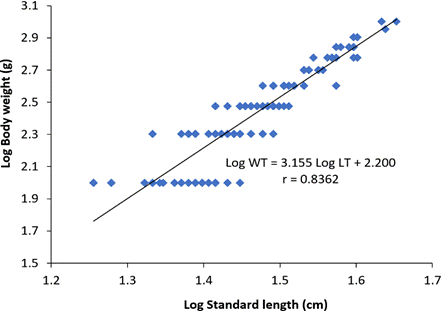
Figure 2. Log transformed graph for Length-weight relationship for Cultured C. gariepinus.
CONCLUSIONS
Morphometric assessment provides critical data for evaluating growth performance, informing profit and business decisions in aquaculture. The significance of the study in assessing the growth performance of plastic tank cultured C. gariepinus in the first cycle of fish production at the TETFund Centre of Aquaculture and Food Technology facility, has provided information that will assist in the efficient management of subsequent aquaculture activities. Results of length-weight relationship and condition factor showed a positive allometric growth and good physiological state of health of the fishes. This indicates that exogenous culturing factors of feeding efficiency and water quality management practices utilized for aquaculture provided a suitable environment for fish growth. Also, it has contributed to the body of knowledge on the successful culturing of C. gariepinus to marketable size in plastic-tanks; and has provided data for comparison with other culturing facilities.
ACKNOWLEDGMENTS
The authors are grateful to Mr. Ufuoma Itejere – Farm Supervisor, and Staff of the TETfund Centre of Excellence in Aquaculture and Food Technology (TCEAFT) University of Benin for their assistance.
FUNDING INFORMATION
This study was funded by Tertiary Education Trust Fund (TETFUND) Abuja, Nigeria.
REFERENCES
Abubakar, M. S., & Lawal, A. D. (2023). Seasonal Variation in the Condition Factor of Clarias gariepinus Raised in Controlled Aquaculture Settings: Aquaculture Research Journal, 36(2), 143–148.
Adeboye, A. A., & Fashina, I. M. (2022). Relationship between Fish Length, Weight, and Condition Factor in Clarias gariepinus: Aquaculture Research Journal, 34(2), 123–130.
Ainsworth, R. F., Vickers, L. H., Bolland, J. D., Taylor, M. J., Harvey, J. P., Noble, R. A. A., Cowx, I. G., & Nunn, A. D. (2024). Two decades of body length measurements of larval and juvenile fish populations in English rivers. Scientific data, 11(1), 1271. https://doi.org/10.1038/s41597-024-04127-w
American Public Health Association (APHA), American Water Works Association, Water Environmental Federation. (2023). Standard Methods for the Examination of Water and Wastewater (24th ed.). APHA Press.
Amponsah, S.K.K. (2025). Preliminary studies on the population dynamics of African Sicklefish (Drepane africana, Osorio 1892) from the coast of Ghana. Aquatic Research, 8(1), 52-59. https://doi.org/10.3153/AR25005
Ayo-Olalusi, C. I. (2014). Length-weight Relationship, Condition Factor and Sex Ratio of African Mud Catfish (Clarias gariepinus) Reared in Flow-through Systems Tanks. Journal of Fisheries and Aquatic Sciences, 9(5), 430–434. https://doi.org/10.3923/jfas.2014.430.434
Bagenal, T. B. (1978). Aspects of fish fecundity; In: S.D. Gerking (ed). Ecology of Freshwater Fish Production. Blackwell Scientific Publication, Oxford. 20 – 39.
Belton, B., Little, D. C., Zhang, W., Edwards, P., Skladany, M., & Thilsted, S. H. (2020). Farming fish in the sea will not nourish the world. Nature, 11(1), 1–8. https://doi.org/10.1038/s41467-020-19679-9
Choure, S. B., Shelke, A. N., & More, M. S. (2025). A Comprehensive Review of Morphometric and Meristic Variations in Freshwater Fishes: Trends, Environmental Drivers and Taxonomic Implications. Asian Journal of Fisheries and Aquatic Research, 27(12), 36–48. https://doi.org/10.9734/ajfar/2025/v27i121035
Dan-Kishiya, A. S. (2013). Length-Weight Relationship and Condition Factor of Five Fish Species from a tropical water supply reservoir in Abuja, Nigeria. American Journal of Research Communication, 1(9), 175 - 187.
Davies, O.A., Tawari, C.C., & Keme-Iderikumo, K. (2013). Length-Weight Relationship, Condition Factor and Sex Ratio of Clarias gariepinus Juveniles Reared in Concrete Tanks. International Journal of Scientific Research in Environmental Sciences, 1, 324–329. https://doi.org/10.12983/ijsres-2013-p324-329
Egun, N. K., & Oboh, I. P. (2022). Potential contribution of captured fishes to the recommended nutrient intakes (RNIs): A case study of commercial fish species from Ikpoba reservoir, Edo State, Nigeria. Measurement: Food, 5, 2022, https://doi.org/10.1016/j.meafoo.2021.100014
Egun, N. K., Oboh, I. P., Olowo, C. U., & Enabulele, C. O. (2024). Fish Food and Community Health: An Assessment of the Contribution of Capture Fisheries to Nutritional Needs of Households in Nigeria. Aquatic Food Studies, 4(2), AFS260. https://doi.org/10.4194/AFS260
Egun, N. K., Olowo, U. C., & Oboh, I. P. (2022). Potential contribution of selected wild fish species to the minerals intake of Pregnant and Lactating Women, Children and Adults in Rural Riverine Communities of Edo State: Insights and Outcomes. Measurement: Food, 8, 2022. https://doi.org/10.1016/j.meafoo.2022.100063
Eneh, I. I., & Okoro, S. M. (2021). Influence of Stocking Density on Growth and Condition Factor of Clarias gariepinus in Cage Culture: International Journal of Aquaculture and Fisheries, 56(5), 218–224.
Eze, R. U., Nwankwo, P. E. and Ekene, J. (2020). Comparative analysis of growth patterns in Clarias gariepinus: Aquaculture Studies, 11(3), 151-158.
Fagbuaro, O., Ola-Oladimeji, F. A., Ekundare, O. V., Adebayo, C. O., & Akinyemi, O. (2019). Length-weight relationship and condition factor of Clarias gariepinus from Igbokoda, Ondo State, Nigeria. Journal of Zoological Res., 3, 15-18. https://doi.org/10.22259/2637-5575.0302004
Fagbuaro, O., Oso, J. A., Olurotimi, M. B., & Akinyemi, O. (2015). Morphometric and Meristic Characteristics of Clarias gariepinus from Controlled and Uncontrolled Population from Southwestern Nigeria. Journal of Agriculture and Ecology Research International, 2(1), 39–45. https://doi.org/10.9734/jaeri/2015/11781
Flinn, S. A., & Midway, S. R. (2021). Trends in Growth Modeling in Fisheries Science. Fishes, 6(1), 1. https://doi.org/10.3390/fishes6010001
Froese, R., & Pauly, D. (2011). FishBase. World Wide Web Electronic Publication. http://:www.fishbase.org
Getso, B.U., Abdullahi, J.M., & Yola, I.A. (2017). Length-Weight Relationship and Condition Factor of Clarias gariepinus and Oreochromis niloticus of Wudil River, Kano, Nigeria. Agro-Science Journal of Tropical Agriculture, Food, Environment and Extension, 16 (1), 1–4. https://doi.org/10.4314/as.v16i1.1
Gurkan, S., & Innal, D. (2018). Some morphometric features of congeneric pipefish species (Syngnathus abaster Risso 1826, Syngnathus acus Linnaeus, 1758) distributed in Lake Bafa (Turkey). Oceanological and Hydrobiological Studies, 47(3). 239-247. https://doi.org/10.1515/ohs-2018-0023
Hamid, M.A., Mansor, M., & Siti-Azizah, M. N. (2015). Length-weight relationship and condition factor of fish populations in Temengor reservoir: Indication of environmental health. Sains Malaysiana, 44(1), 61-66. https://doi.org/10.17576/jsm-2015-4401-09
, , , & (2024). Inferring the metabolic rate of zebrafish from ventilation frequency. Journal of Fish Biology, 105(6), 1939–1950. https://doi.org/10.1111/jfb.15922
Ibrahim, B. U., Auta, J. Balogun, J. K., Bolorunduro, P. I., & Dan-kishiya, A. S (2012). Length-weight relationship and condition factor of Barilius in Kontagora Reservoir, Niger State, Nigeria. Biological and Environmental Sciences Journal for the Tropics, 9(2), 155. https://doi.org/10.3923/jfish.2012.13.15
Jobling, M. (2002). Environmental factors and rates of development and growth. In Handbook of fish biology and fisheries. Vol. I, Blackwell Publishers. 97–122. https://doi.org/10.1002/9780470693803.ch5
Joseph, A. P., Otong, B. E., & Asuquo, P. E. (2019). Length- weight relationship and condition factor of different sexes of Clarias gariepinus and Oreochromis niloticus from Calabar River, South-Eastern Nigeria. International Journal of Scientific and Engineering Research, 10(8), 1076–1090. https://doi.org/10.4314/as.v16i1.1
Kamble, M. T., Salin, K. R., Chavan, B. R., Medhe, S. V., Thompson, K. D., & Pirarat, N. (2024). Length-weight relationship and condition factor of Nile tilapia (Oreochromis niloticus) fed diets supplemented with guava and star gooseberry leaf extract. F1000Research, 13, 540. https://doi.org/10.12688/f1000research.145369.2
Khillare, C., & Khandare, R. (2020). Food and Feeding Habits, Length-Weight Relationship and Condition Factor of Fresh Water Fish Mystus armatus. Asian Journal of Fisheries and Aquatic Research, 6(3), 41–48. https://doi.org/10.9734/ajfar/2020/v6i330100
Kuebutornye, F.K.A., D.N. Akongyuure and E.H. Alhassan, 2019. Morphometric characteristics and feeding habits of five commercial fish species of the Libga Reservoir in the Northern Region of Ghana. Int. J. Oceanogr. Aquacult., 3(2), 000164. https://doi.org/10.23880/ijoac-16000164
Langi, S., Maulu, S., Hasimuna, O. J., Kaleinasho Kapula, V., & Tjipute, M. (2024). Nutritional requirements and effect of culture conditions on the performance of the African catfish (Clarias gariepinus): a review. Cogent Food & Agriculture, 10(1). https://doi.org/10.1080/23311932.2024.2302642
Le-Cren, E.D. (1951). The length weight relationship and seasonal cycle in gonad weight and condition in the perch (Perca fluviatilis). Journal of Animal Ecology, 20(2), 201-219. https://doi.org/10.2307/1540
Maulu, S., Langi, S., Hasimuna, O. J., Missinhoun, D., Munganga, B. P., Hampuwo, B. M., Gabriel, N. N., Elsabagh, M., Van Doan, H., Abdul Kari, Z., & Dawood, M. A. O. (2022). Recent advances in the utilization of insects as an ingredient in aquafeeds: A review. Animal Nutrition, 11, 334–349. https://doi.org/10.1016/J.ANINU.2022.07.013
Merino, G., Murua, H., Santiago, J., Arrizabalaga, H., & Restrepo, V. (2020). Characterization, Communication, and Management of Uncertainty in Tuna Fisheries. Sustainability, 12(19),8245. https://doi.org/10.3390/su12198245
Mota, V.C., Martins, M.L., Albuquerque, C., Dias, J. D., & Pilarski, F. (2022). Advances in tank-based aquaculture: A review of management and technological innovations. Reviews in Aquaculture, 14(1), 58-76.
Muchlisin, Z.A., Musman, M., & Siti-Azizah, M. N. (2010). Length-weight relationships and condition factors of two threatened fishes, Rasbora tawarensis and Poropuntius tawarensis, endemic to Lake Laut Tawar, Aceh Province, Indonesia. Journal of Applied Ichthyology, 26(6), 949-953. https://doi.org/10.1111/j.1439-0426.2010.01524.x
Ngo, M.V., Hoang, T.T., Tran, D.V., Nguyen, D.K.D., & Pham, H.Q. (2024). Tank color affects growth, feed utilization efficiency, coloration, and biochemical composition of juvenile giant trevally (Caranx ignobilis Forsskål, 1775). Fish Aquat Sci., 27(9), 588-599. https://doi.org/10.47853/FAS.2024.e56
Odeyemi , D. F. ., Idowu , E. O., & Oso , J. A. (2025). Length-Weight Relationship And Condition Factor Of Fish Species In Ero Reservoir, Ikun Ekiti, Nigeria. American International Journal of Biology and Life Sciences, 7(1), 1-7. https://doi.org/10.46545/aijbls.v7i1.360
Olatunji, T. A., Fashina, I. M., & Yusuf, A. A. (2022). Influence of Salinity on Fish Health and Growth in Clarias gariepinus Cultured in Aquaponic Systems. Aquaculture and Fisheries Review, 21(4), 210–215.
Olowo, U. C., Egun, N. K., Ehigiator, A. P., & Oboh, I. P. (2022). Growth analysis and sex ratio of fish species from the Ovia River, Edo State, Nigeria. Biologija, 68(2), 110–120. https://doi.org/10.6001/biologija.v68i2.4731
Omotayo, F., Folasade, A. O., & Olugbemi, V. E. (2019). Length - Weight Relationship and Condition Factor of Clarias gariepinus from Igbokoda, Ondo State, Nigeria. Journal of Zoological Research, 3(2), 15–18. https://doi.org/10.22259/2637-5575.0302004
Onyekwelu I., Anyadike C. C., Ossai N. I., Nwoke O. A., Ndulue E. L. (2021). Interrelationship between some morphometric parameters and bodyweight of tank-based cultured African catfish (Clarias gariepinus Burchell, 1822). Aquaculture and Fisheries, 6(6), 628-633. https://doi.org/10.1016/j.aaf.2020.07.016
Oso, J. A., & Iwalaye, A. O. (2016). Growth pattern and Condition factor (K) of four dominant fish species in Ero dam in Ekiti State, Nigeria. British Journal of Applied Research, 1(2), 8-12.
Reis Neto, R. V., Freitas R. T. F. D., Serafini M. A., Costa A.C., Freato T. A., Rosa, P. V., & Allaman I. B. (2012). Interrelationships between morphometric variables and rounded fish body yields evaluated by path analysis. Revista Brasileira de Zootecnia, 41(7), 1576-1582. https://doi.org/10.1590/S1516-35982012000700004
Shittu, A. I., & Oguntoye, V. (2020). Length-Weight Relationship and Condition Factor of Reared Clarias Gariepinus in Ilaro, Ogun State, Nigeria. International Journal of Research and Scientific Innovation, 7(12), 174 – 176.
Yadav, A., & Newton, P. (2023). Morphometric analysis of fish, Labeo rohita in Lucknow, Uttar Pradesh, India. World Journal of Biology Pharmacy and Health Sciences, 14(3), 122–128. https://doi.org/10.30574/wjbphs.2023.14.3.0259
Yerima, R., & Usman, L. U. (2020). Length-weight relationship and condition factor of some fish species in Dadin-kowa Reservoir Gombe North Eastern Nigeria. International Journal of Applied Biological Research, 11(1), 17-24. https://doi.org/10.15580/gjbs.2013.10.102313920